Jul 2, 2026
Area Rug Childrens Playroom: Creating a Fun Learning Space
There's more to designing a kids' playroom than picking out bright wall colors and fun toys. The right flooring is the base of any interesting learning place. An area rug childrens playroom is more than just a pretty addition; it protects against falls, marks off areas for activities, and turns cold floors into cozy places to explore. When parents, teachers, and procurement managers think about making playrooms where kids can safely jump, crawl, and use their minds, they need to choose floor covers that are comfortable, long-lasting, and easy to clean.


How to Choose the Best Area Rug for Children's Playroom
To choose the right playroom flooring, you need to carefully think about a number of things that affect both how it will be used right away and how much it will be worth in the long run. When buying something, safety should always come first, but it's especially important when little kids spend hours playing on the floor.
Material Safety and Health Standards
The health and safety of kids who use play area flooring every day are directly affected by the materials used to make it. We suggest that you buy mats made from non-toxic fibers that meet the highest safety standards around the world. As a natural material that doesn't hold on to chemicals, crystal velvet is a great choice for kids' rooms because it is soft and safe for their skin. Some manufactured materials may give off volatile organic compounds, but good crystal velvet is tested very carefully to make sure it doesn't give off any dangerous chemicals. When looking at play mats for kids, make sure they have certifications like OEKO-TEX Standard 100, which checks for more than 300 harmful chemicals, or that they follow CPSIA rules that limit the amount of lead and phthalates in kids' goods.

Durability Considerations for High-Traffic Environments
Play places for kids are always being used, which would wear down normal floor covers very quickly. Examine building details that suggest life when assessing an area rug for a children's playroom. A density of 750 to 1100 grams per square meter gives the material a solid body that doesn't mat and keeps its shape over time. The 5 mm thickness is just the right amount of thickness—it's thick enough to provide insulation and padding, but not too thick that it causes tripping risks or problems with door opening. Backing materials are very important. Dot plastic or silicone strip backings hold the rug down firmly without glue, so kids won't slip and hurt themselves while playing.
Practical Maintenance Requirements
Homes and businesses that are always on the go need floor coverings that can handle being cleaned often without wearing down. If you can wash your rug in a machine, you don't have to worry about spills and mistakes. Anti-stain treatments on the surface keep liquids from getting into the fibers, so you can clean up quickly. When spills happen, which they always do in kid's areas, materials that are both absorbent and quick-drying keep water from getting to the floors below, which cuts down on downtime. We have seen that crystal velvet naturally fights marks from food, paint, and juice, and only needs to be spot-treated with light, child-safe cleaners instead of harsh chemicals that could harm the air quality.
The right size makes sure that the rug covers the play area well without taking up too much room. Standard sizes work for most home playrooms, while special sizes can be made to fit specific plans in daycares, preschools, or business waiting areas. By measuring the activity area and leaving enough space around the furniture, you can make clear lines that kids will naturally know as their play area.
Comparing Popular Types of Rugs Suitable for Children's Playrooms
Knowing the differences between the different types of rugs helps procurement teams find goods that meet the needs of the surroundings and fit within the budget. There are many types of playroom floors on the market, and each one performs differently.
Area Rugs Versus Wall-to-Wall Carpeting
There are clear benefits to movable floor coverings over fixed placements. When your kids' needs change, you can rearrange rooms with area rugs. You can also move them around for yearly storage or deep cleaning, and you can replace only the worn-out parts instead of the whole floor. This adaptability has a lot of long-term value for rental homes or facilities that change their plans from time to time. The 5mm construction makes it light, so workers can easily roll and move rugs so that the floors underneath can be cleaned thoroughly. This is a useful feature for managing allergens.
Material Performance Comparison
Natural fibers, like wool, naturally prevent fire and are very soft, but they usually cost more and need to be cleaned by a professional. Cotton is breathable and good for the environment, but it might not be stain-resistant enough for kids' rooms where they play. Synthetic materials, especially modern crystal velvet formulas, have many useful properties, such as being more resistant to stains and fading thanks to colorfast dyes, and they are also affordable enough for business buyers to buy in bulk. Good synthetic rugs come with an anti-slip backing, which means you don't need to buy separate rug pads. This makes fitting easier and lowers the total cost of ownership.
Specialized Features for Children's Applications
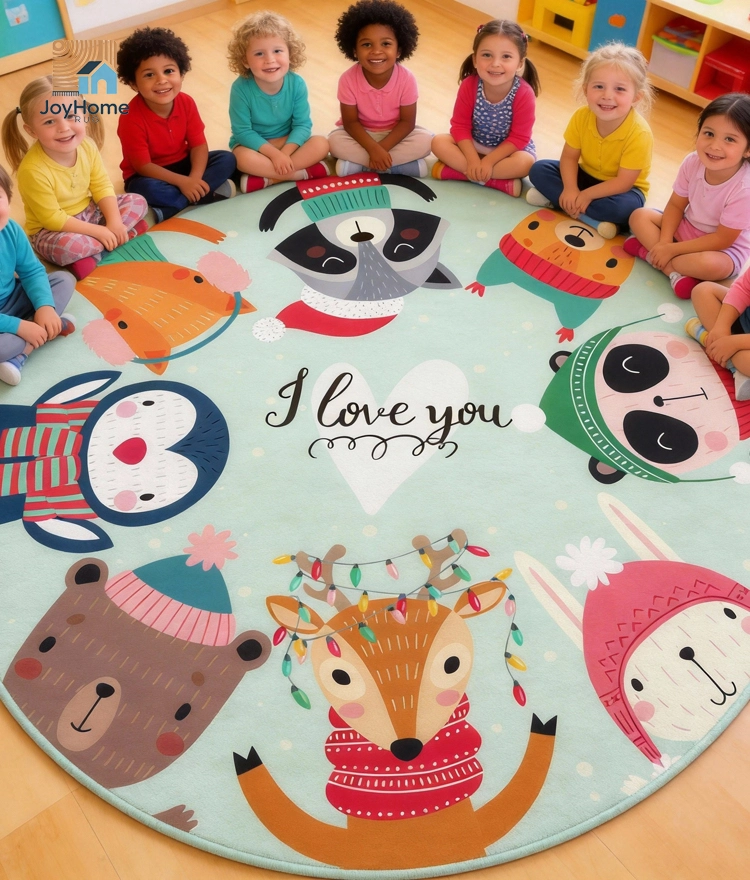
Some rugs are made with features that are meant to keep kids safe and keep them interested. Waterproof shields keep subfloors safe from spills while still letting air flow, which stops mold from growing. Floor patterns with teaching features like alphabet letters, numbers, and maps turn the space into a fun way to learn. Round shapes don't have any sharp edges, and they naturally encourage circle time activities in school settings. Heat transfer printing technology makes sure that the pictures stay bright and don't fade even after many washings and play sessions. This keeps kids interested and helps them learn about space over long periods of time.
When comparing options, keep in mind that an area rug childrens playroom that has built-in anti-slip technology, a stain-resistant treatment, and the ability to be washed in a machine usually offers a better overall value than cheaper options that need to be replaced more often or maintained by a professional.
Benefits of Area Rugs in Children's Playrooms: Beyond Aesthetics
Picking the right carpet for a child's playroom can help with growth and efficiency in ways that go far beyond improving the look. When floor coverings are placed strategically, safety, learning involvement, and room utilization all get better.
Physical Safety Enhancements
When kids fall while playing, they will hurt themselves, but if the surface is padded, the damage is much less severe. The 5mm padding protects knees, elbows, and heads during sliding by absorbing the force of falls. Soft flooring not only keeps kids from getting hurt, but it also pushes them to explore their bodies in ways they might not do on hard floors, like moving, rolling, and playing floor games that improve their motor skills and sense of space. Acoustic properties are also important. Rugs block out noise from running feet and dropped toys, making rooms calmer and less stressful for both kids and people watching them. They also keep sound from traveling to other rooms or lower floors in buildings with multiple levels.
Cognitive and Developmental Advantages
Patterns and colors that are interesting are useful for more than just decoration; they help kids learn. Bright, clashing designs naturally catch kids' attention and can help define specific areas for activities like an arts and crafts area, a reading spot, or a building area. This visual organization helps kids learn about space and makes it easier for them to choose activities on their own. Educational patterns with letters, numbers, or pictures that have a theme spark kids' interest and let them learn while they play. Soft crystal velvet feels good under bare feet or moving hands. This helps with cognitive development, which is especially important for babies and toddlers who are exploring their surroundings.
Commercial and Procurement Benefits
Companies that buy playground flooring benefit from having relationships with suppliers that allow them to make big orders, make changes to the flooring to fit specific needs, and guarantee consistent quality. Manufacturers with advanced production facilities, like those with 25 specialized tools spread out over 20,000 square meters, can reliably deliver orders in 7 to 15 days, even if they are big. Getting rid of minimum order quantities lets new and small businesses get professional-grade goods without having to keep too much inventory on hand. Custom pattern design lets childcare businesses, store play areas, and corporate family centers that want a consistent look create their own brands. Quality control procedures that make sure all items are inspected before they are shipped protect buyers from getting damaged goods that could put them at risk or cost a lot to return.
Quality kids' play mats are an investment that supports both short-term practical needs and long-term strategy goals because they are safe, help kids grow, and can be bought in a variety of ways.
Maintenance and Cleaning Tips for Children's Playroom Area Rugs
For play area flooring to keep its good looks, cleanliness, and safety features, it needs to be maintained in a way that is specific to high-activity areas. Taking good care of your products will make them last longer and protect your investment.
Routine Maintenance Procedures
Regular cleaning gets rid of dirt and dust on the surface and keeps them from getting deep into the fibers, where they speed up wear. We suggest cleaning play areas that get a lot of use at least twice a week, and more often during busy times or after messy activities. To keep the top fibers from getting damaged, use vacuum accessories that are right for the pile height. Rotating rugs regularly evens out wear patterns, which is especially important in play areas where kids tend to focus on certain areas. Kids will bring in a lot less dirt and other outdoor germs if they take off their shoes before entering play areas.
Stain Response Strategies
If you clean up spills right away, you can stop lasting stains and germ growth. The anti-stain treatment that is put on good area rug childrens playroom surfaces keeps liquids from soaking in, giving you time to clean up before the staining happens. If you spill something new, don't rub it. Instead, use a clean, absorbent cloth to lift the liquid without spreading it or pushing it deeper into the fibers. Use non-toxic, child-safe cleaning products made just for synthetic fibers to get rid of sticky or dried-on substances. Rugs that are properly made can be washed in a machine, which lets you do deep cleaning every so often to get rid of oils, allergens, and bacteria that spot cleaning can't get rid of. When putting clothes in the washing machine, use cool water, a gentle mode, and mild soap. Do not use bleach or fabric softeners, as they can damage the fibers or the backing that keeps them from slipping.
Long-Term Care Strategies
Professional cleaning every 12 to 18 months is a good addition to regular home care, especially for business spaces that serve many children every day. Professional tools and knowledge get rid of deeply embedded pollution while recovering the look and feel of the fibers. Proper storage during long periods of not being used—rolling instead of folding to avoid creasing, and wrapping in breathable materials to keep wetness from building up—keeps the quality of the product. Check the backing materials every so often for signs of wear and tear. A good plastic or silicone strip backing should stay attached and keep its grip for years, but damage from frequent machine washing or strong cleaning products can make things less safe.
Procurement Guide: Finding the Right Area Rug Suppliers and Brands
To do strategic sourcing, you need to find manufacturing partners who always give certified goods, can work with your unique needs, and offer quick service that meets your ongoing business needs. The method of choosing a source has a big effect on long-term success.
Evaluating Manufacturer Capabilities
A manufacturer's ability to successfully fill orders is directly related to how much they can produce and how advanced their technology is. When compared to generic makers, facilities with specialized equipment like laser cutting for exact measurements, edge-locking technology for durability, and heat transfer printing for bright, permanent designs produce better results. We use 25 high-tech production tools in a 20,000-square-meter building that is only used to make home rugs and floor mats. Each day, we can make 3,000 square meters of carpets and mats. We can handle both small special orders and big institutional contracts with this infrastructure, and we don't have to sacrifice quality or add time to the process. When looking at possible sources, find out what kinds of products they make. Companies that offer a wide range of materials, such as polyester, crystal velvet, and different backing choices, show that they are flexible enough to meet the changing needs of projects.
Quality Assurance and Certification
Reliable producers use strict quality control procedures to keep customers from getting damaged goods. Look for suppliers who do a full review of all goods before they are shipped, not just a statistical sample, which could miss problems. Ask for proof of safety certificates that apply to your market: CPSIA compliance for sales in the U.S., EN71-3 for sales in Europe, or OEKO-TEX Standard 100 for sales around the world. Colorfastness testing makes sure that dyes won't fade in light and won't move to skin or clothes when they're being worn. Tuft bind testing makes sure that fibers stay firmly connected even after a lot of use. Dimensional stability testing shows that rugs keep their shape and sides that are flat even after being cleaned many times. With these scientific validations, you can be sure that the goods will work as promised in the real world.
Customization and Service Flexibility
Adaptability is needed in today's supply lines. Suppliers that offer OEM and ODM services can meet specific design needs, such as business clients' needs for custom sizes and patterns or branded names. Being able to place an order without having to meet a strict minimum quantity lowers the financial risk for new businesses trying out new markets or for established businesses testing out new services. Quick pre-sale support helps customers choose the right goods for their needs, and quick post-sale service fixes any problems that come up during installation or use. Reliable transportation partnerships make sure that arrival times stay the same, which is very important for projects with set due dates. Export-standard packaging, like roll packaging, box packaging, or woven bag packaging, keeps goods safe during foreign shipping and makes the best use of containers. When looking for an area rug childrens playroom provider, give preference to companies that can show they have the technical know-how, commitment to quality, and quick service that make relationships that last.
Conclusion
To make the best learning settings for kids, you have to carefully choose every part, especially the basic ones like floor covers. The right area rug for a children's playroom has measured advantages, including cushioned safety during active play, acoustic control for quieter areas, clearly defined activity zones that support organization and freedom, and simple upkeep that meets cleanliness standards. A crystal velvet construction with a non-slip backing, stain-resistant treatment, and machine-washable convenience takes into account the practicalities of places where spills, falls, and constant activity are normal. Strategic sourcing from makers that offer flexible customization, strict quality control, and quick service makes sure that procurement teams can get goods that meet current needs and support long-term goals in household, educational, and business settings.
FAQ
What safety certifications should an area rug in a children's playroom possess?
Professional mats should meet the CPSIA standards that limit phthalates and lead, the OEKO-TEX Standard 100 standards that check for over 300 harmful chemicals, and the ASTM D2859 standards for flammability. Good makers show proof that they follow these rules, which means the product doesn't pose any chemical or fire risks to kids when it's being used normally.
How do I determine the appropriate size for playroom carpeting?
Find out how big the play area is and make sure the rug goes at least 18 to 24 inches past the edges of the furniture to allow for movement. Most home playrooms are standard sizes, but business playrooms need custom sizes to fit their specific plans. The rug should define the space where the activities will happen without taking up too much room or making it easy to trip near doors.
Can these rugs withstand commercial use in daycare centers?
Yes, building with a high density of 750 to 1100 grams per square meter can stand up to heavy business traffic. When you combine crystal velvet fibers with an anti-slip backing and a stain-resistant surface treatment, you get products that are good for places that serve a lot of kids every day. If you follow the right care instructions, these products will usually look good and work well for 5 to 7 years.
What cleaning methods work best for children's play area rugs?
Deep cleaning can be done in a washing machine on a gentle cycle with mild soap. Daily care includes vacuuming regularly and treating spots right away with child-safe cleaners. The absorbent features dry quickly, so there isn't much downtime after cleaning. Professional cleaning once a year or every six months can extend the life of business setups that get a lot of use.
Partner with JoyHome for Premium Playroom Flooring Solutions
JoyHome is an expert at making high-quality floor covers for kids that are safe, long-lasting, and good for their growth. In order to accommodate busy play areas, our crystal velvet ABC Baby Room Carpet has a non-slip backing, a stain-resistant surface treatment, and the ability to be washed in a machine. As an established area rug childrens playroom manufacturer with a 20,000-square-meter building housing 25 high-tech production tools, we guarantee a wait time of 7 to 15 days for all orders, even large ones. Our flexible approach gets rid of strict minimum order amounts, and our OEM and ODM skills let us meet your needs for custom sizes, designs, and branding. Before it is shipped, every product is inspected for quality at every level, making sure that the standard is always high. Email our team at admin@longtengmen.com to talk about your unique needs and get quotes that are tailored to the scope of your job.
References
1. Anderson, M. & Thompson, L. (2021). Early Childhood Learning Environments: Design Principles for Safety and Development. Educational Spaces Publishing.
2. Chen, S., Rodriguez, P., & Kim, J. (2022). "Material Safety Standards in Children's Products: A Comprehensive Review." Journal of Consumer Product Safety, 15(3), 112-128.
3. Global Industry Analysts, Inc. (2023). Home Textiles and Floor Coverings: Market Analysis and Growth Projections. San Jose: GIA Research Division.
4. Johnson, R. (2020). The Science of Play: How Physical Environments Shape Child Development. Developmental Psychology Press.
5. Miller, K. & Foster, D. (2022). "Acoustic Properties of Textile Floor Coverings in Educational Settings." Building Acoustics Quarterly, 29(2), 67-83.
6. National Association for the Education of Young Children (NAEYC). (2023). Creating Quality Learning Environments: Standards and Best Practices for Early Childhood Facilities. Washington, DC: NAEYC Publications.
Online Message
YOU MAY LIKE
High quality furniture manufacturer