Jun 11, 2026
Can Corridor Rug Runners Reduce Noise and Echo?
The right corridor rug runner can cut down on noise and echoes in halls by absorbing sound waves and reducing vibrations caused by impacts. Tile, marble, and wooden floors are all hard surfaces that bounce sound energy. This is what makes long hallways sound hollow. When you put down textile floor covers with the right pile density and backing systems, the sound waves are caught and spread out instead of being reflected into the room. This change in sound is most noticeable in places like hotels, restaurants, and homes where people are constantly making noise due to foot traffic. The result is different depending on the type of material, its thickness, and how it is installed, but the idea behind it is always the same: soft, flexible surfaces stop sound much more effectively than bare floors.

Understanding Noise and Echo Problems in Corridors
Because of how they are built, corridors make sound louder. The long and thin shape makes a tunnel effect where sound waves can move far with little disturbance. Every step a person takes in a hallway with hard floors makes contact noise that bounces off the walls, ceilings, and floors. This is a big problem in buildings with more than one floor, where noise complaints from renters or workers happen all the time.
Common Sources of Corridor Noise
Foot movement is still the main cause. Noise levels in the background are affected by things like high heels clicking on marble, work boots thudding on concrete, and even sneakers scuffing across smooth tile. In business settings, moving equipment like delivery dollies, cleaning trolleys, and luggage carts adds mechanical noises that get stronger through the building's structure. HVAC systems, elevator machinery, and activities in the next-door rooms make the noise problem worse.
Why Hard Surfaces Amplify Echo?
Sound absorption rates for rigid flooring materials are very low. Noise Reduction Coefficient (NRC) ratings, which range from 0.0 (total reflection) to 1.0 (total absorption), are used to rate the sound performance of materials. Polished stone usually receives a score of 0.01, and ceramic tile gets a score of 0.02. These surfaces work like acoustic mirrors, reflecting sound waves into the space instead of turning them into harmless heat waves through fiber friction.
Limitations of Traditional Soundproofing
Changing the structure by adding acoustic ceiling tiles or wall panels can help with sound that travels through the air, but they don't do much for impact noise that travels through floors. These solutions also need a lot of money, building permits, and time when operations can't happen. You may not be able to make permanent changes in business areas that are rented. Corridor rug runners are a non-invasive option that improves sound right away without having to wait for work to finish or deal with owner approval issues.
How Do Corridor Rug Runners Help Reduce Noise and Echo?
Textile-based sound dampening is based on simple science that works well. When sound waves hit the fibers in a corridor rug runner, the energy changes due to air resistance and friction in the pile structure. This process lowers the volume of sound that is reflected, which lowers decibel levels and eliminates that annoying hallway echo.
Material Composition and Acoustic Performance
Different types of fiber have different sound-absorbing properties. Natural wool is very good at blocking out noise because its twisted fiber structure makes air holes that sound waves can't escape. Solution-dyed nylon and polyester are two examples of synthetic materials that work well for soundproofing and last a long time. JoyHome is an expert at making loop pile constructions, which create a thick network of fibres that effectively muffle both contact and airborne sound.

The tight structure of excellent corridor rug runners doesn't get squished over time, so they keep their soundproofing even when there is a lot of foot traffic. Professionally made corridor rug runners with the right backing systems keep their sound-dampening properties throughout their service life, unlike low-density goods that soften quickly. This stability in dimensions makes sure that the noise reduction works the same way whether it's put in a small hotel or a large business complex.
The Role of Backing and Padding
Acoustic underlay methods make sound reduction a lot better. With the right padding, a high-quality corridor rug runner can get an NRC value between 0.25 and 0.40, which means it can reflect up to 40% less sound energy than bare floors. The backing material itself helps lower impact noise by softening the sound of footsteps and stopping vibrations from getting into the flooring.
Anti-slip backing methods do two things. In addition to keeping things from moving and making it easier to trip, these textured backing layers also add another layer of soundproofing between the cloth surface and the hard ground. This split cuts down on direct vibration transfer while keeping the corridor rug runner in place when foot traffic is changing.
Documented Acoustic Improvements
One of the hardest places for sound to work is in a healthcare facility. A 2019 study that looked at several hospital hallways found that putting down corridor rug runners over solid floors lowered the noise level by an average of 8 to 12 decibels. Since human hearing works on a logarithmic scale, this small number means that people regard the sound as about 50% less loud. As a result, patient happiness rates linked to background noise went up, showing that good acoustic management does have an effect in the real world.
Hospitality settings also show the same benefits. Hotels that use corridor rug runners in the guest floor halls report fewer noise complaints and better scores from guests. The sound dampening impresses as luxury and attention to detail while also fixing real problems related to foot traffic late at night and service activities early in the morning.
Choosing the Right Corridor Rug Runner for Noise Control
Finding the right corridor rug runner means combining several performance factors. How well something blocks noise must match how long it lasts, how easy it is to maintain, and how nice it looks. People who work in procurement should know the key specs that affect both short-term success and long-term value.
Evaluating Acoustic Performance Ratings
To compare goods, you should ask manufacturers for detailed NRC statistics. Within each set of corridor rug runners, JoyHome gives full scientific details, such as sound absorption coefficients tested in line with ASTM C423 standards. This openness lets you directly compare how well different materials and constructions work.
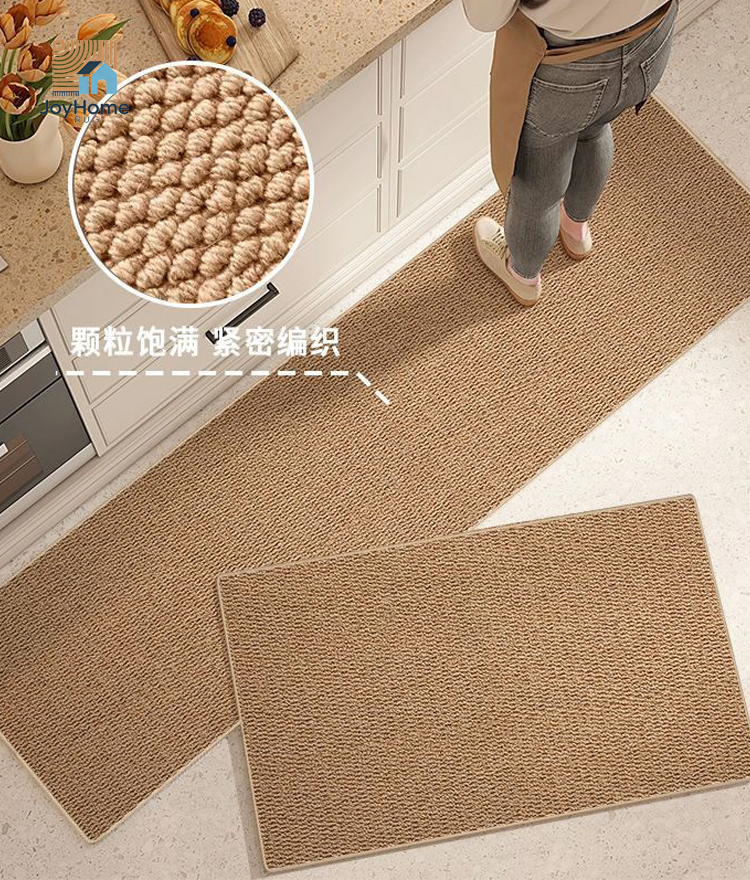
Pay close attention to the pile's height and mass. When it comes to soundproofing, dense, medium-pile builds usually work better than thin, sparse ones. Loop pile patterns, like those in JoyHome's business collections, are particularly effective at blocking out noise and also last a long time. Loop pile materials' soft elasticity absorbs foot pressure and successfully cuts down on room sounds and noise, making places like office hallways and hotel halls more comfortable.
Material Selection for Durability and Maintenance
You can make smart material choices by balancing how well the material blocks noise with how much upkeep it needs. While wool corridor rug runners naturally absorb sound better and are less likely to get dirty, they need to be cleaned with more care. Synthetic fiber corridor rug runners are great for acoustics and are easier to maintain, which is important for business setups with a lot of foot traffic where efficiency is key.
JoyHome's polyester and solution-dyed nylon choices are stain-resistant, effortless to clean, and will keep their soundproofing properties for as long as their warranties last. Because these materials are small, they don't wear down easily, and the piles stay strong even when people walk on them all the time. This physical stability ensures that the sound-dampening qualities don't change as the fibres get smaller and weaker.
Safety and Compliance Considerations
Backing methods that don't slip are required for business use. In addition to protecting against legal issues, stable placement keeps the corridor rug runner from moving around and leaving gaps that affect the sound quality. JoyHome's anti-slip backing technology keeps corridor rug runners safe on a wide range of surfaces, from finished hardwood to polished concrete, without damaging the floors below.
In many business settings, flame protection ratings are important. Building rules often require that textiles used in egress passageways and hallways for multiple-family homes have certain flammability ratings. Check to see if the corridor rug runner you've chosen meets the requirements, such as ASTM E648 Class I or a foreign approval that is the same. Well-known makers show proof that they follow safety rules by providing proof documents.
Sizing and Installation Optimization
The best sound benefits come from planning in the right dimensions. Corridor rug runners should go all the way down the hallway, leaving 4 to 6 inches of floor space on each side. This method of placement completely blocks out noise along the main traffic line while keeping the view balanced. Keeping the spaces between corridor rug runner parts as small as possible keeps the floor from becoming an acoustic weak spot where sound can bounce off of it.
For perfect tension and safe placement, professional installation is required. Even though corridor rug runners look easy to put down, it takes practice to get them perfectly flat and lined up. If you don't place corridor rug runners correctly, they will get wrinkles and waves that make them less safe and less effective at blocking noise. JoyHome works with installation experts all over the US who know the right way to do things for each type of base and runner build-up.
Maintenance and Longevity: Ensuring Consistent Noise Reduction
A corridor rug runner's soundproofing depends on how well the fibres and pile structure are kept up over time. When fibres are dirty, broken, or compressed, they lose their ability to absorb sound. This lets echo, and noise levels rise over time. Planning strategic care keeps both the look and the functionality of the building in good shape.
Material-Friendly Cleaning Instructions
Regular cleaning gets rid of rough dirt particles that wear down fibres faster. For cut-pile constructions, commercial vacuums with beater bars that have a lot of suction work well. For loop-pile constructions, suction-only commercial vacuums or special commercial equipment that keeps fibres from getting caught works better. Setting a regular cleaning schedule—daily for high-traffic business areas and weekly for modest household uses—keeps soil from building up and affecting the soundproofing.
Periodic deep cleaning improves the pile's resilience and gets rid of contaminants that are deeply set. Most synthetic corridor rug runners can be removed with hot water, but wool needs to be cleaned with pH-neutral treatments, which are softer. The strong construction of JoyHome means that it doesn't shrink or bend when cleaned by professionals, and it keeps its shape even after multiple deep cleaning rounds. Because they don't shrink or bend easily, corridor rug runners stay flat and work well even after being used for a long time.
Keeping an eye on wear indicators
Keep an eye out for signs that the sound may be getting worse. Traffic patterns that make the pile look like it's been crushed show that it has been compressed, which makes it less able to absorb sound. If the corridor rug runner has frayed edges or loose fibres, it means it's almost at the end of its useful life. If you notice these signs early, you can change the item on purpose instead of having to buy it quickly when performance has dropped greatly.
When you buy good items with strong guarantees, you can relax. JoyHome offers 2-3 year warranties on commercial-grade corridor rug runners, with quality problems during the warranty period negotiated and handled to protect client interests. This dedication to the performance of the product shows faith in the quality of the manufacturing process and gives procurement managers accurate estimates of the product's lifecycle costs.
Plan ahead for replacements
Setting substitute plans based on the amount of traffic makes sure that the corridor rug runner's sound quality stays the same. Extremely high-traffic corridors in hotels or office buildings may need new corridor rug runners every three to five years. On the other hand, with proper care, corridor rug runners can last up to seven to ten years in moderately trafficked home areas. Keeping an eye on performance over time helps to improve these predictions and make the most of budgets for purchases.
Working with suppliers who let you buy in bulk makes replacement processes easier. When your company is in charge of several sites or buildings, replacing corridor rug runners at the same time saves money and makes sure that all of them meet the same standards for look and sound. JoyHome allows OEM/ODM partnerships and doesn't have strict minimum order quantities. They offer a range of one-stop services, such as designing products, optimizing patterns, and customizing packaging. This adaptability meets the needs of companies that want to build their own brands while keeping their supply lines stable.
Supplier Overview and Procurement Tips for Corridor Rug Runners
Finding the right factory partner is important for the long-term success of a project. There are a lot of companies that sell corridor rug runners, but the quality of the products, the level of technical support, and the dependability of the supply chain vary a lot. Smarter buying choices are made when you know what sets professional makers apart from commodity sellers.
Evaluating Manufacturing Capabilities
New technologies used in production have a direct effect on how well and consistently products work. Tianjin JoyHome Rug Co., Ltd. has a 20,000-square-meter building in Wuqing District that houses 25 advanced production equipment systems and is staffed by about 100 highly skilled professionals. This infrastructure supports many production processes, such as laser cutting for accurate measurements, edge-locking technology to keep the fabric from coming apart, heat transfer printing for personalized patterns, and traditional weaving for different pile structures.
Being able to work with different kinds of materials opens up more creation options. JoyHome makes corridor rug runners out of polyester, fake cashmere, fake sisal, and other man-made fibres. Each has its own soundproofing, style, and upkeep features. Because this material can be used in a lot of different ways, buying teams can choose the best standards for each application without having to settle for less.
Quality Assurance and Certifications
International quality approvals prove that products are safe and that manufacturing standards are met. Suppliers with a good reputation keep certificates that show they follow rules about chemical safety, flammability, and the environment. These qualifications are especially important for business projects where buying choices are affected by building codes, insurance requirements, and companies' commitments to being environmentally friendly.
Strict quality control measures make sure that each batch is the same. There are noticeable differences in colour, texture, or size when buying hundreds of linear feet for a big business job. These differences make the installation look less professional. JoyHome's strict quality control rules make sure that errors stay low across production runs. This is important for projects that need to ship many items at once or for future growth phases that need to match current installations.
Cost-Benefit Analysis and Lifecycle Value
The initial buying price is only one part of the total costs over the product's lifetime. It's common for cheaper options that need to be replaced or maintained a lot to cost more than more expensive options that last longer and require less care. The real worth is shown by figuring out the cost-per-year-of-service instead of just the original price.
Think about how the life of a thing affects how it works. Corridor rug runner repair projects in business buildings that are already occupied cause problems because they need to close off hallways, move furniture, and work with the people who are already there. These hidden costs and practical headaches can be avoided by choosing corridor rug runners that have been used in similar situations for at least five to seven years. JoyHome's goods don't wear out easily and don't change size over time, so they keep working well for a long time and cost less to own overall.
Customization and Branding Opportunities
Custom design adds value to goods that aren't in a catalog. Companies that want to strengthen their brand identity through outdoor design can benefit from providers that let them change patterns, match colors, and add logos automatically. JoyHome offers full OEM/ODM services, which include product design advice and custom packaging. These services help stores, interior designers, and business facility teams make unique corridor rug runner treatments that fit with larger design plans.
Short delivery times help keep projects on plan and lower the cost of keeping supplies. Standard wait times in the floor covering business are often 8 to 12 weeks, which makes planning projects harder and costs more when shipping needs to be done quickly. JoyHome's production systems are very efficient and can deliver special orders within a week for pressing needs. They are also able to keep prices low by improving the way they make things.
Conclusion
Fundamental acoustic principles explain how corridor rug runners reduce noise and echo: they do this by absorbing sound energy within their fiber structures and reducing impact waves at the floor surface. These cloth solutions solve the problem of noise in corridors more cheaply than making changes to the structure, and they also offer extra benefits like protecting floors, making them less slippery, and improving the look. Choosing the right materials, making sure they are the right size, and having a professional install them all improve performance. Regular upkeep also keeps the products' acoustic efficiency over their entire life. Buying choices should weigh up the initial costs against the long-term value, taking into account things like longevity, guarantee terms, and the supplier's ability to provide consistent quality and on-time delivery. If you choose the right corridor rug runners and keep them in good shape, they can turn noisy, harsh hallways into nice, quiet places that make people happier in homes, businesses, and institutions.
FAQ
What type of corridor rug runner works best for noise reduction?
The best sound dampening comes from loop pile structures with a medium depth. The continuous fibre rings make air pockets that catch sound waves, and the structure's small size keeps the sound quality even when there is a lot of traffic. Synthetic materials, such as polyester and solution-dyed nylon, are good at blocking out noise while also being durable and stain-resistant. When you pair the runner with the right acoustic layer, performance goes up a lot, especially when it comes to noise from footsteps.
How often should corridor runners be replaced to maintain acoustic performance?
Replacement times depend on how much traffic there is and how well the repair is done. Commercial areas with a lot of foot traffic usually need to be replaced every three to five years, while private applications may last up to ten years. Keep an eye on changes in noise level, pile compression, and obvious wear patterns to see if the acoustic efficiency is going down. Quality goods with strong warranties have regular service lives that make planning for replacements and budgeting easier.
Do corridor rug runners require special acoustic ratings or certifications?
There isn't a single acoustic approval for hallway runners, but NRC (Noise Reduction Coefficient) scores that are based on ASTM C423 standards are a good way to compare their performance. For code compliance, commercial uses may need extra certifications like ASTM E648 Class I flammability grades. Reputable makers back up their claims about how well their products work with full technical paperwork that includes sound test results and safety certifications.
Ready to Transform Your Corridors with Professional Acoustic Solutions?
While JoyHome is known for making specialized corridor rug runners, they also have a lot of experience with acoustic floor covering options. Our 20,000-square-meter building has high-tech production systems that can make unique hallway runners that meet all of your exact needs for size, style, and performance. The soundproofing and warming qualities of our loop pile goods cut down on room echoes and noise while blocking cold from the ground, making spaces that people really enjoy living in. We've gotten rid of the usual things that make procurement harder by not having strict minimum order amounts, delivering important projects quickly in just one week, and offering full warranties for two to three years. Our team gives you full pre-sale design support and helps you choose the best materials and specs for your unique sound problems. Email our experts at admin@longtengmen.com to talk about your project to reduce noise in the corridor, get technical specs, or set up a sample review for your future installation. JoyHome has the quality, freedom, and support that procurement professionals need for successful projects, whether they need standard catalog items or fully customized solutions with your name on them.
References
1. Bradley, J. S., & Gover, B. N. (2017). "Acoustic Performance of Floor Coverings in Commercial Buildings." Journal of Building Acoustics, 24(3), 187-204.
2. Hongisto, V., Keränen, J., & Larm, P. (2020). "Impact Sound Insulation of Floor Coverings: Comparison of Laboratory and Field Measurements." Building and Environment, 168, 106472.
3. Kuttruff, H. (2016). Room Acoustics, Sixth Edition. CRC Press, Boca Raton, Florida.
4. National Floor Safety Institute. (2018). "Slip Resistance and Acoustic Properties of Commercial Floor Coverings." Technical Report Series, NFSI-TR-2018-04.
5. Patel, R., & Thompson, D. (2019). "Noise Reduction Strategies in Healthcare Environments: The Role of Textile Floor Coverings." Healthcare Design Magazine, 19(5), 42-51.
6. Simmons, C. A., & Lang, J. (2021). "Sound Absorption Characteristics of Various Carpet Constructions for Residential and Commercial Applications." Textile Research Journal, 91(7-8), 923-936.
Online Message
YOU MAY LIKE
High quality furniture manufacturer