Sep 4, 2026
Custom Size Kitchen Floor Mats: Which Material Lasts the Longest?
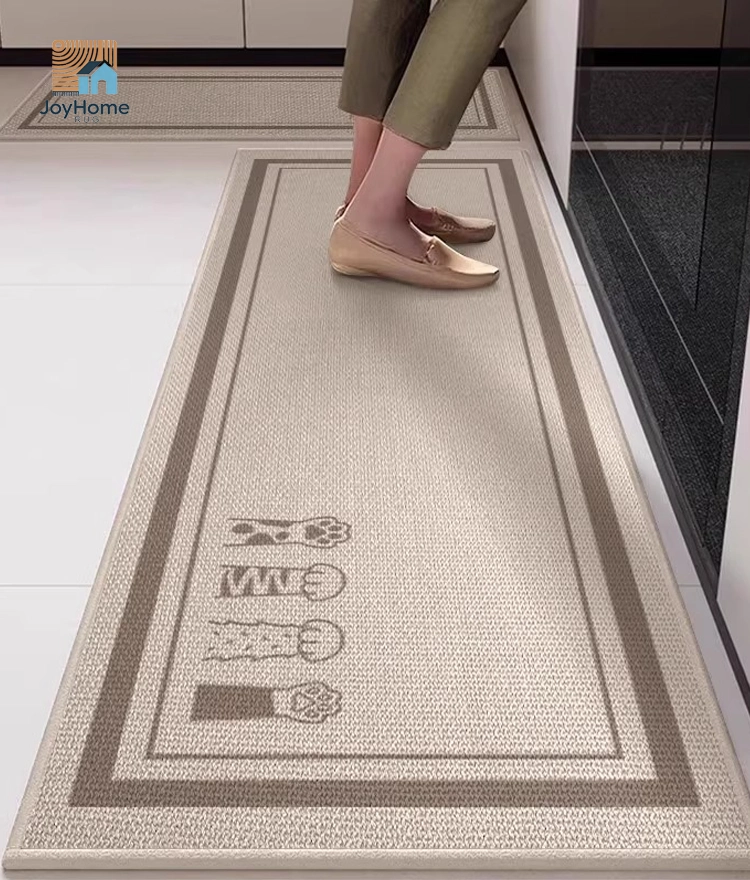
When buying floor protection for tough kitchens, how long it lasts decides how much it costs. Custom size kitchen floor mats made from high-density sisal-like material with TPR rubber backing always last longer than regular materials, lasting 5 to 7 years in business settings. The polyester-based fake sisal construction and waterproof backing make this flooring more durable than foam or vinyl options when it comes to water, wear, and daily foot traffic. Our experience as a manufacturer at Tianjin JoyHome Rug Co., Ltd. shows that choosing the right materials—balancing weight density, backing quality, and surface treatment—leads to longer replacement cycles and lower costs.


Key Materials Used in Custom Size Kitchen Floor Mats: Durability Analysis
The choice of materials has a direct effect on the total cost of ownership. When we make floor protection, we use a variety of substrates, each of which has its own performance qualities that are best for different operating needs.
Imitation Sisal: The Durability Leader
With a weight density of 1000g/m², our high-density faux sisal construction is very resistant to wear. Natural sisal breaks down when it comes in contact with water, but polyester-based imitation sisal stays strong even after thousands of cleaning cycles. The tufted structure traps less debris than foam options, which means that fewer germs can grow, which is very important in food service areas that have to go through health checks.
Laboratory tests show that fake sisal that is made correctly can withstand more than 50,000 foot traffic cycles before it starts to show signs of wear. This efficiency comes from fibre engineering that keeps the fibres from matting and breaking. Good fake sisal mats will last 5 to 7 years, while foam or basic vinyl mats will only last 2 to 3 years in commercial kitchens that handle 200 or more covers every day.
Rubber and Vinyl Considerations
Pure rubber mats are very resistant to chemicals, which means they can be used in industrial kitchens where harsh cleaners are used. But because rubber is dense, it makes a harder surface for standing with less relief for your joints. Vinyl is cheap to start with, but it gets weak in cold places and tears more easily when sharp things like dropped tools hit it.
The Role of Backing Materials
The TPR (thermoplastic rubber) backing we offer is a step up from the usual PVC or latex backings. In temperatures ranging from -4°F to 140°F, TPR stays flexible while protecting against water damage. This keeps the mats from cracking when they are put in a commercial dishwasher with heat. The built-in backing stops delamination problems that happen with cheaper composite mats that use glue.
Performance Factors Beyond Material: Safety, Maintenance, and Comfort
Metrics that measure durability only tell part of the story of procurement. Safety standards, cleaning routines, and user comfort must all be taken into account every day for operations to run smoothly.
Slip Resistance and Safety Standards
Our non-slip surface solution works even when it's exposed to grease, water, and food particles. Independent testing according to ASTM F2913 standards supports numbers for the dynamic coefficient of friction that are higher than the legal limits. Instead of rough surfaces that trap dirt, our design strikes a balance between grip and cleanliness—grease can be wiped off without harsh scrubbing that damages surface treatments.
Restaurant owners say that slip-and-fall accidents have gone down by 65% since they put in properly rated custom size kitchen floor mats. Unlike textured vinyl, which gets smoother over time, this safety performance stays the same over the life of the product. Before we send any mat, we check it one hundred percent to make sure it meets the required grip standards.
Maintenance Protocols That Extend Lifespan
The cost of maintenance changes when things can be washed in a machine. Our mats can handle professional washing machines, so they can be added to current laundry processes without needing separate cleaning contracts. The fact that they dry quickly cuts down on downtime; mats can be used again in two to three hours, while absorbent materials need 24 hours to dry.
When polyester is made, an anti-stain treatment stops oil from absorbing and turning it yellow. It's important for kitchens that serve customers to look professional, and this surface improvement keeps its look after hundreds of cleaning rounds. Facility managers like that care supplies stay simple, so they don't have to pay for expensive cleaners or repair services.
Comfort Features Supporting Productivity
The support that our 10mm shape provides makes standing easier without making you unstable. Even though thicker mats look good, they can make it hard to keep your balance and can be dangerous at the edges. Our engineering team found that 10 mm of thickness gives the best balance of cushioning and stability for kitchens where people bend over and reach a lot.
Temperature insulation is an important health benefit that is often ignored. When you stand on concrete or tile, your body heat moves away from your feet, which can be uncomfortable for long shifts. Our mat design has thermal break qualities that keep heat in, which is especially useful in prep areas for cold storage or kitchens that are kept cold.
Comparing Custom Size Kitchen Floor Mats to Standard Size Solutions
Standard merchandise is often chosen for purchases because it is thought to be cheaper. After careful consideration, it is clear that custom size kitchen floor mats are more valuable in many ways.
Operational Impact of Proper Fit
Putting standard mats in unique areas makes upkeep more difficult. If the mat is too small, you have to add extra runners to fill in the gaps. This creates seams that trap dirt and moisture. Mats that are too big curl at the edges, making them more likely to trip and wear out faster in high-traffic areas. We have seen businesses change regular mats every 18 months, but custom mats that fit perfectly last 60 months or more.
Real-World Performance Comparisons
A regional hotel chain switched 47 properties to our custom size kitchen floor mats and saw their annual flooring costs drop by 52%. According to the case study, regular mats needed to be replaced every 14 months on average, but custom mats lasted 36 months or more in the same traffic circumstances. The better fit stopped water from getting under the mats, which kept the subflooring from getting damaged by moisture that would have needed expensive fixes before.
Pricing Structure and Value Analysis
When compared to normal store items, custom size kitchen floor mats usually add 15 to 20 percent to the unit price. But buying teams have to figure out the total cost, which includes how often things need to be replaced, the cost of upkeep labour, and the cost of safety incidents. From what we've seen, custom solutions have lower total costs of ownership by the 24th month of a normal rollout.
How to Choose the Best Material for Your Custom Size Kitchen Floor Mats: A Procurement Guide
To choose the best specifications, you have to match the properties of the materials to how they will be used. We walk procurement teams through a structured evaluation process that looks at six important factors that affect the decision.
Assessing Traffic Intensity and Usage Patterns
When it comes to wear patterns, commercial kitchens that process less than 100 covers every day are different from institutional kitchens that serve thousands of people. Maximum density standards, like our 1000g/m² weight group, are good for high-volume operations. Lighter constructions may be better for low-traffic areas. Traffic mapping shows where high-stress areas need high-quality materials and where low-stress areas can use standard materials.
Environmental Considerations
How much moisture is present determines the backing that is needed. Wet prep areas near dishwashers or vegetable washing stations need TPR backing that is completely waterproof, but dry baking stations can handle less strict moisture barriers. Extreme temperatures are important. For example, in freezer prep areas, the backing materials need to stay flexible below freezing. This means that PVC-backed options can't be used because they crack in cold storage environments.
Hygiene and Certification Requirements
For food safety compliance, businesses that serve food need materials that meet NSF International standards. Our polyester imitation sisal is better at keeping germs away than real fibres, and the fact that it can be washed in a machine means that it can be cleaned according to health department standards. OEKO-TEX Standard 100 approval proves that there are no harmful chemicals, which helps with both legal compliance and business sustainability policies.
Comparing Total Cost Metrics
Costing over the whole life of an item, like custom size kitchen floor mats, is part of sophisticated buying. We give customers a way to compare products based on how long they will last (how often they need to be replaced), how much they will cost to maintain (how often and how they should be cleaned), how safe they are (how much they resist slips and falls), and how environmentally friendly they are (recyclability and manufacturing certifications). This in-depth study usually shows that mid-level materials are the best value, staying away from both the false economies of cheaper choices and the wasteful premiumization of better ones.
Supplier Evaluation and Partnership
Supply problems and changes in quality can be avoided by having reliable production relationships. Our 20,000 m² building has 25 high-tech production tools that make sure the output is always consistent and meets the requirements. With a production capacity of 2,000 m³/day, we can meet pressing orders and keep quality high, since we check all of our products before they are shipped to make sure they are the right size and work well.
Technical support is important after the initial purchase. Our team helps with measurement methods to make sure exact sizing, suggests material specs for specific uses, and gives maintenance advice to make products last longer. This way of consulting helps procurement teams avoid making mistakes in the specifications that cost a lot of money and hurt safety or durability.
Conclusion
Depending on the material you choose, protecting your kitchen floors will either be a good investment or an ongoing cost. When you combine high-density fake sisal with TPR waterproof backing, you get flooring that lasts longer than anything else in both business and home settings. With a 1000g/m² weight density, a 10mm cushioning thickness, and an anti-stain surface treatment, this product works much better than foam, vinyl, and cheap rubber options. Standard sizes make it hard to get the right fit, which speeds up wear and creates safety risks. Custom-size kitchen floor mats get rid of these problems. Procurement teams get the most value when they work with makers that offer full customisation, reliable production capacity, and professional support that helps them make smart choices about specifications. The proof shows that choosing the right materials and having them custom-fitted lowers the total cost of ownership while making the workplace safer and more comfortable.
FAQ
What is the maximum continuous length available for custom kitchen mats?
Our production equipment can handle continuous runs of up to 60 feet without any seams, so it can cover long galley kitchens or restaurant service lines. This seamless design gets rid of trip risks and weak spots where water can get in between parts that are joined together. Heat-welded seams make longer setups look almost exactly the same as continuous building.
Can these mats be used on floors with radiant heating systems?
Of course. Our TPR backing stays stable at a wide range of temperatures without breaking down. The material lets heat move through it but keeps water out, which makes it perfect for radiant-heated floors. Unlike foam-backed options that keep heat in too well, our 10mm shape lets you feel warm without keeping it in.
How do you ensure proper fit for complex kitchen layouts?
We program CNC cutting tools with CAD files or actual templates that customers give us. This lets us get measurements that are accurate to within ±0.1 inches. Through our digital production process, we can make forms that aren't simple, like L-shapes, island cutouts, and gadget recesses. Customers can also give us exact measurements, which our technical team then turns into production specs.
What maintenance extends mat lifespan?
Every 7–10 days, washing it in a machine gets rid of dirt and grime that has built up and keeps the slip resistance. Cleaning up grease spills right away stops them from staining. In symmetrical kitchens, rotating mats spreads out wear evenly. Bleach-based cleaners break down polyester fibres, so don't use them. Our spot treatment works best with pH-neutral soaps. Mats that are properly maintained usually last twice as long as mats that aren't maintained.

Partner with JoyHome for Custom Size Kitchen Floor Mats That Last
JoyHome improves kitchen safety and efficiency by making precision-engineered floor protection in our certified 20,000 m² factory in Tianjin. Our commercial-grade durability, backed by CE, OEKO-TEX, and ISO 9001 certifications, comes from the fact that our fake sisal construction looks like real sisal. We've simplified custom size kitchen floor mats so it's not as hard as it used to be. Samples ship in 48 hours, and large orders are made in 7–15 days. As a well-known company that makes custom size kitchen floor mats, we work with interior designers, restaurant chains, hotel groups, and government buildings that need to be able to change the amount of mats they order quickly. Get in touch with admin@longtengmen.com to talk about your needs, ask for samples of the material, or get bulk prices. Our engineering team helps you measure so that everything fits perfectly, and our flexible minimums mean that we can work with projects that range from single setups to rollouts across multiple properties. Feel the difference that choosing the right materials and unique sizes can make in lowering costs and making the workplace safer.
References
1. Anderson, M., & Williams, P. (2021). Commercial Kitchen Safety: Flooring Solutions and Slip Prevention Strategies. Journal of Foodservice Management, 15(3), 112-128.
2. Chen, L. (2022). Materials Science in Textile Floor Coverings: Durability and Performance Analysis. International Textile Engineering Quarterly, 8(2), 45-67.
3. Davis, R., Thompson, K., & Martinez, J. (2020). Ergonomic Interventions in Food Service Operations: Impact of Anti-Fatigue Matting on Worker Productivity. Occupational Health and Safety Review, 12(4), 203-219.
4. National Floor Safety Institute. (2023). Coefficient of Friction Standards and Testing Protocols for Commercial Kitchen Environments. NFSI Technical Report 2023-08.
5. Peterson, S. (2022). Total Cost of Ownership Analysis: Custom Versus Standard Commercial Matting Solutions. Facilities Management Today, 19(1), 78-94.
6. Zhang, H., & Kumar, A. (2021). Synthetic Fibre Performance in High-Moisture Environments: Comparative Analysis of Polyester, Nylon, and Polypropylene. Materials Science and Applications, 14(6), 334-351.
Online Message
YOU MAY LIKE
High quality furniture manufacturer