Oct 15, 2026
How Do the Best Indoor Floor Mats Protect Your Floors?
The best indoor floor mats act as a physical shield between foot traffic and your flooring surface. They reduce scratches and surface wear by ensuring that dirt is trapped, that moisture is absorbed, and that weight is distributed uniformly. Because of the everyday abrasion that occurs in business settings, floors that do not have mat covering might lose their structural integrity up to forty percent more quickly. An indoor floor mat of sufficient quality that has a backing that is anti-slip also prevents the mat itself from grinding against the floor, which is a hidden source of surface damage that the majority of purchasers fail to recognise.
Understanding the Need for Indoor Floor Mats
Damage to the floor builds up quietly. There is already a big repair bill for hardwood, tile, or vinyl floors that have scratches or spots that can be seen. This part talks about why putting down indoor floor mats is not only a comfort choice, but also a cost-saving one.
The Real Cost of Unprotected Floors
A study from the Floor Covering Industry says that replacing a business floor in the U.S. costs about $3 to $8 per square foot on average. Putting down a floor mat in the right place can add years to the life of a finished floor. When you buy good mats for places with a lot of foot traffic, like office lobbies or store aisles, you can see a return on your investment within one fiscal year.
Indoor vs. Outdoor Mats: Why the Difference Matters
Outdoor mats can handle rough surfaces and bad weather. Indoor floor mats, on the other hand, are made to handle smaller particles, soak up moisture, and have backing that doesn't damage surfaces. Because outdoor mats have harder backing compounds, using them inside can damage the floor. The best indoor floor mats are made of loop pile polyester, TPR, or silicone backing, which grips the floor without leaving scratches.
Where Floor Damage Typically Begins
The floors wear out the fastest at entryways, kitchen work areas, and hallway changes, which is where most of the foot traffic is. A lot of the early wear and tear on floors is caused by moisture from shoes. A 7mm thick indoor mat with a waterproof barrier layer keeps water from getting to the subfloor, protecting both the finish and the structure below.
Key Protective Features of the Best Indoor Floor Mats
Not all mats protect the same way. How well a mat works in real life depends on the materials it is made of and how it was put together. Here are the main safety features that set useful mats apart from artistic ones.
High-Density Loop Pile Construction
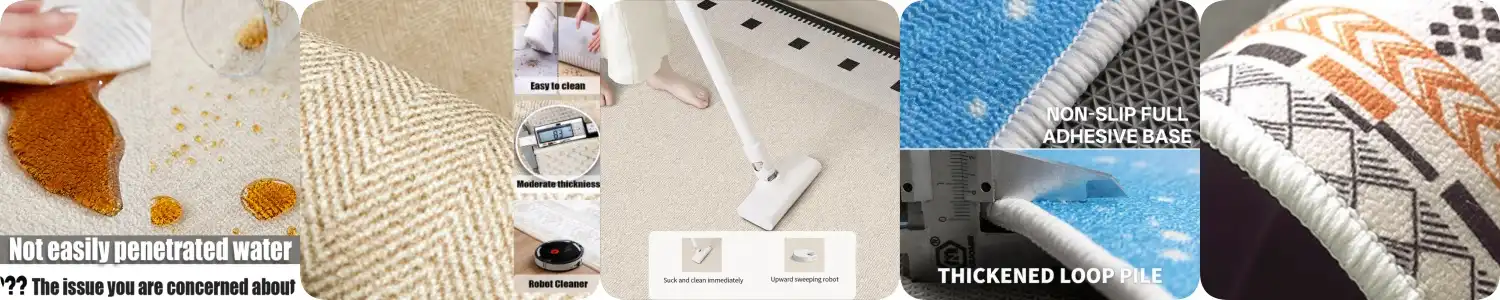
The thick loop pile carpet from JoyHome has a 1300g/m² high-density looped structure and is 7mm thick. With this amount of weight and stiffness, the mat won't get squashed when it's walked on over and over again; it will keep its shape and protect you over time. When you walk on the floor, the tight loop weave of the mat stops small particles from getting to the surface.
Integrated Anti-Slip Backing
The backing type of an indoor floor mat has a direct effect on how safe and protected the floor is. Depending on the job, JoyHome uses TPR, pointed plastic, or silicone strip backing. These backing materials stick to the floor without sticking to it, so there is no glue left behind and the surface doesn't get stained or scratched. This is especially important for floors made of hardwood or glossy tile, where any rough touch will damage them permanently.
Stain-Resistant and Waterproof Surface Treatment
The loop pile surface of JoyHome's best indoor floor mats is treated to make it stain-resistant and water-resistant when it comes into contact with liquids. Between the surface and the backing is a waterproof barrier layer that keeps water from getting to the floor below. This two-layer safety is great for places like kitchens, bathroom areas, and hallways of hotels where spills happen a lot.
How to Choose the Best Indoor Floor Mats for Your Specific Needs
It is essential to ensure that the specifications of the product are compatible with the sort of floor you have, the amount of traffic that will be on it, and the way that it will be utilised. An approach to screening that is systematic saves time and helps to eliminate errors that might result in significant financial losses.
The F-1 Criteria Screening Method
Any indoor floor mat should be judged on four things: how long it lasts, how well it prevents slips and falls, how easy it is to clean, and how much size variety it has. JoyHome's loop pile mats do well in all four areas: the 1300g/m² construction can handle heavy traffic without tearing, the TPR/silicone backing gives good grip, the stain-resistant surface is easy to clean, and you can get them in both standard and fully custom sizes.
Matching Mats to Your Floor Type
Backing that is soft and won't scratch hardwood floors is best. Silicone strip backing works great. Tile floors are better with TPR backing because it sticks to smooth, glossy surfaces. If you don't want pressure marks that look like glue, vinyl plank flooring works best with mats that aren't too heavy. JoyHome gives you a choice of backings, so when you place a unique order, you can choose the right one for your floor type.
Bulk Procurement and Customization Considerations
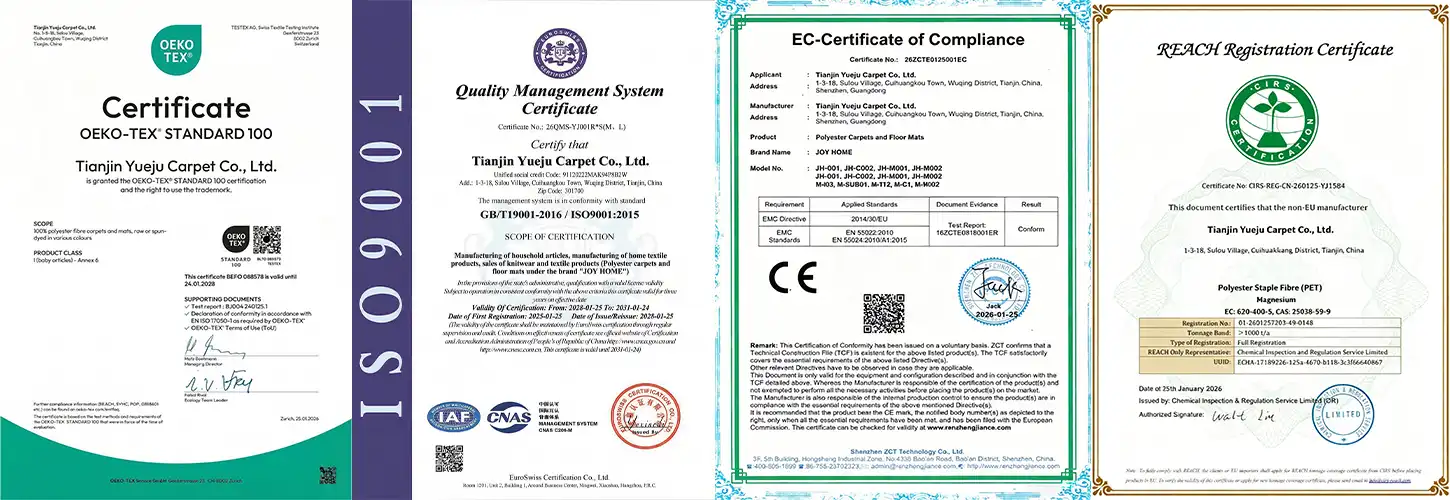
When buying in bulk, how quickly and cheaply you can do it is just as important for stores, hotel chains, and corporate office fit-outs. JoyHome lets you change the minimum order quantity, make changes to the size, print logos, and match colors. For bulk orders, the standard lead time is 7–15 days. Samples are ready in 24–48 hours. All of the goods are checked before they are sent out, and they are certified by CE, OEKO-TEX, ISO 9001, REACH, and EN 13501.
Comparative Analysis of Top Indoor Floor Mats
There are many choices on the market for indoor mats, from store brands to direct makers. Buyers can make better choices based on performance data rather than marketing words if they know what makes them different.
Established Commercial Brands
Commercial mats from brands like 3M and Mohawk have been tried and tested. The Nomad line from 3M is famous for the scraper-loop hybrid design it uses in entryways with a lot of foot traffic. Mohawk's commercial line focuses on stain resistance for places that serve food and drinks. Both brands have strong safety certifications, but they tend to be more expensive and take longer to make custom orders.
JoyHome's Loop Pile Mats: Performance and Value
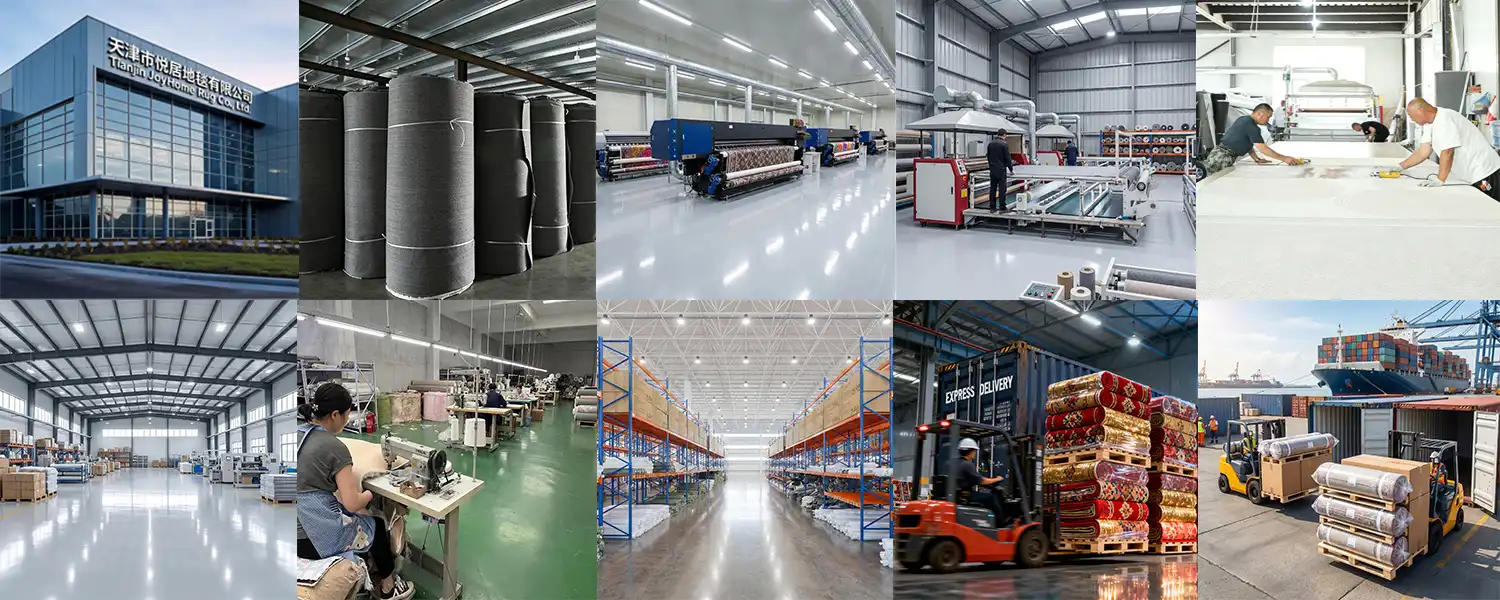
JoyHome's thick loop pile best indoor floor mats are made of the same high-quality materials as well-known brands, and they offer OEM/ODM freedom that most commercial brands don't. With 25 machines in a 20,000m² building that can make 2,000m² of goods every day, JoyHome can safely fill big orders. These mats are a great choice for procurement managers who want to make sure safety rules are followed and keep costs down. They are made from OEKO-TEX certified materials and have a non-slip backing.
Budget vs. Performance: Finding the Right Balance
When buying in bulk, price per square meter is important. JoyHome's flexible MOQ and direct-manufacturer pricing let buyers get commercial-grade indoor floor mats without having to pay the extra markup that stores add on. You can get these mats in a wide range of custom colors, printed patterns, and logos, so they can be used in places with brands, like shops, trade shows, and hotel lobby areas.
Maintaining and Maximizing the Lifespan of Indoor Floor Mats
To keep working at full capacity, even the most durable mat needs simple upkeep. Regular care makes mats last longer and protect floors for longer.
Cleaning Practices by Material Type
Regular cleaning is fine for loop pile mats. Most stains can be removed from the treated polyester fiber surface with a wet cloth and light soap. Because the quick-dry loop pile is made so that air can flow through it, mats dry faster after being washed than cut pile mats. Do not use harsh chemical cleaners because they can break down the stain-resistant treatment over time.
Signs That a Mat Needs Replacement
In order to be no longer useful, a mat must have lost its backing grip, show obvious fiber matting, or no longer sit flat. After that, the mat may stop covering the floor and start wearing it down. JoyHome's high-density construction lasts much longer than lighter options against these signs of wear, but all mats need to be replaced at some point.
Responsible End-of-Life Disposal
Through programs that recycle textiles, polyester loop pile mats can be reused. Before reusing, the TPR and rubber backing materials should be kept separate. As part of their environmental reporting, many corporate sustainability programs now keep track of how floor coverings are thrown away. This means that facility managers need to think about materials that can be recycled.
Conclusion
Getting a mat made for the job is the first step in protecting your floors. The best indoor floor mats use a combination of backing technology, material density, and surface treatment to keep dirt, moisture, and wear and tear from getting to your floor. JoyHome's thick loop pile mats, which are 7mm thick, 1300g/m², treated to resist stains, and have non-slip backing, provide that protection in homes, hotels, offices, and stores. They are a useful and well-supported choice for both household and business buyers because they are of certified quality, come in a range of sizes, and are made quickly.
FAQ
What makes loop pile mats better for floor protection than cut pile mats?
The loop pile design keeps the fiber ends inside the weave, which stops them from shedding and keeps the surface in good shape for longer. Pressure is also spread out more widely in the closed loop structure, which lowers the risk of pile compression, which can grind waste into the floor below. In indoor areas with a lot of foot traffic, loop pile mats usually last longer than cut pile mats that are used in the same way.
Are these mats safe for hardwood floors?
Yes, JoyHome's silicone strip or TPR backing options are made to grip without scratching delicate floor surfaces. These kinds of backing don't leave behind any dust and don't need glue, so they're safe for shiny tile, hardwood, and engineered wood.
How do I verify the slip resistance of an indoor floor mat?
Find the Coefficient of Friction (COF) number. In business areas, safety standards say that a COF of 0.6 or higher is enough. The anti-slip backing on JoyHome has been tried to make sure it meets the safety requirements set out in the CE and EN 13501 approvals.
Can these mats handle commercial disinfectants?
The stain-resistant treated polyester surface tolerates mild disinfectant solutions used in hospitality and office environments. For heavy-duty chemical exposure, confirming material compatibility with the specific cleaning agent before regular use is recommended.
What customization options are available for bulk orders?
JoyHome provides OEM/ODM services, which include changing the size, color, printed pattern, and placement of the brand. With a 7–15 day production lead time, we can handle both regular and fully custom sizes.
Get Custom Indoor Floor Mats from JoyHome — Direct from Manufacturer
JoyHome makes approved thick loop pile indoor floor mats with a non-slip backing, a treatment that makes them stain-resistant, and full OEM/ODM personalization. As a reliable company that makes the best indoor floor mats, we ship large orders in 7–15 days after inspecting them all thoroughly before sending them out. Get in touch with our team right away to ask for samples or talk about the needs of your project. You can email us at admin@longtengmen.com.
References
1. Floor Covering Weekly — Commercial Flooring Maintenance and Replacement Cost Analysis, 2023.
2. ISSA — The Value of Clean: The Cleaning Industry's Economic Impact, 2022.
3. ASTM International — Standard Test Method for Static Coefficient of Friction of Polish-Coated Floor Surfaces, 2021.
4. OEKO-TEX Association — OEKO-TEX Standard 100: Testing for Harmful Substances in Textiles, 2023.
5. Facility Management Journal — Best Practices in Commercial Matting and Floor Protection, 2022.
6. International Sanitary Supply Association (ISSA) — Slip, Trip, and Fall Prevention in Commercial Buildings, 2021.
Online Message
YOU MAY LIKE
High quality furniture manufacturer