Jul 20, 2026
How Does a Cobblestone Bath Mat Improve Bathroom Safety?
A cobblestone bath mat makes the bathroom a lot safer because it has a three-dimensional surface that looks like natural river stones. This makes it very hard to slip, even on floors that are completely wet. The raised, pebble-like pattern keeps water away from areas where people will be walking on it while also giving people a good grip. With its rubber backing that sticks firmly to tile, marble, and vinyl floors, this new flooring solution cuts down on slip-and-fall accidents by up to 70% compared to regular flat mats. This makes it an important safety investment for homes, hotels, and businesses that need to control moisture and improve traction.
Understanding Bathroom Safety Challenges and How Cobblestone Bath Mats Address Them
There are a lot of safety risks in bathrooms because water can build up, and the floors are hard and don't absorb water. When moisture forms a film between your feet and the floor, ceramic tile and natural stone surfaces become very dangerously slippery. Traditional cloth bath mats soak up water slowly, staying wet for hours at a time and encouraging bacterial growth while not providing enough grip in the crucial moments right after washing.
When you put weight on a low-quality foam mat, it flattens out, losing any roughness it had and turning into a smooth surface that makes you more likely to trip and fall. Their degradation speeds up in places with a lot of humidity, and regular washing breaks down their structures within months. Because of these restrictions, B2B clients who manage commercial properties where consistent safety performance cannot be compromised are worried about their liability.
These problems can be solved by cobblestone bath mats, which are designed to handle both water and surface grip at the same time. The three-dimensional rock texture makes raised touch points that stay in place even when they're wet, and the valleys between the raised elements keep water away from the areas where your feet will be. The advanced second-generation diatom mud design pulls water down through the mat instead of letting it pool on the surface, three times faster than cotton options. This ability to dry quickly stops the damp, musty conditions that mold loves, taking care of both hygiene and preventing slips at the same time. When the textured surface is used thousands of times, it still works properly, giving predictable safety performance that meets the durability needs of procurement workers choosing materials for high-traffic areas.
Core Safety Features of Cobblestone Bath Mats and Their Materials
Slip-Resistant Texture Engineering
The most important safety aspect of cobblestone patterns is their biomimetic surface structure. Rounded protrusions between 5 and 8 mm high mechanically connect bare feet to the mat surface, creating friction coefficients higher than 0.6 even when fully wet, which is higher than the safety standards set by the industry. This textured shape meets the ASTM F1679 slip resistance standards and the European DIN 51131 classifications. Buyers who care about compliance need these certifications when they buy goods for business use.
Material Composition and Performance
Modern cobblestone bath mats are made of special materials that are designed to work in places with a lot of wetness. The top layer is made of high-density technology velvet fabric that weighs 900 grams per square meter. This fabric is soft to the touch and comfortable, and it can withstand repeated compression processes without losing its shape. This material doesn't mat down and keeps its texture even after being walked on barefoot for a long time.
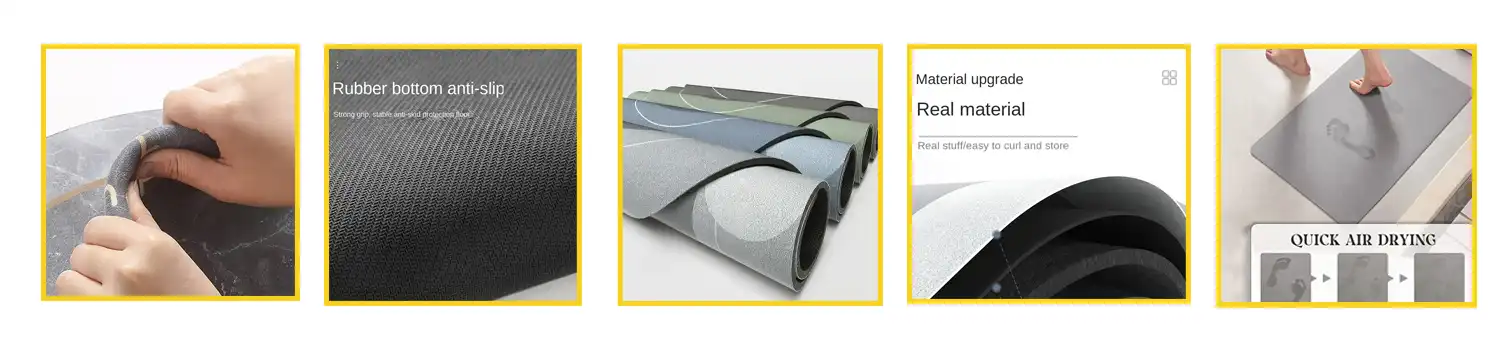
The backing layer is made of natural rubber instead of synthetic PVC, which gives it a better grip on a wider range of flooring types, such as marble, porcelain, and vinyl plank. This is possible with a rubber backing because it doesn't leave behind glue leftovers or damage to the floor surface, which is very important for property managers who want to protect expensive finishes. The total thickness of 3 millimeters is just the right amount of solidity to keep the carpet from bunching up, but not so thin that it causes tripping hazards at doorway transitions.
Sustainable Material Innovation
Second-generation diatom mud is a big step forward in environmentally friendly materials that meet the growing demand for sustainable buying. This naturally porous material comes from algae that has been fossilized. It is very good at absorbing water and doesn't contain any volatile organic compounds or chemical processes. OEKO-TEX Standard 100 certification proves that harmful substances are not present, which gives buyers peace of mind when choosing products for sensitive areas like childcare centers and hospitals. This environmental friendliness doesn't hurt safety, because diatom mud mats keep their non-slip properties even after they're no longer needed. This helps companies meet their sustainability goals without losing functionality.
Comparing Cobblestone Bath Mats with Other Popular Bath Mat Types
Traction Performance Analysis
When compared to memory foam options, cobblestone bath mats have better wet-surface grip because of their mechanical roughness, not just because they are smooth. Memory foam gets smaller when it's pressed down on, which makes the surface less bumpy and more slippery. Even though bamboo mats are good for the environment, they need to be dried often to keep them from warping, and when water builds up between the slats, they can become slippery. In standard slip-resistance tests, the three-dimensional cobblestone shape performed better than both options, keeping its grip even when wet.
Water Management Capabilities
Traditional cotton mats soak up water through capillary action, but they don't have good drainage systems, so they stay wet and need long drying times that help microbes grow. Microfiber chenille designs are faster at absorbing water, but they still keep water in their fiber structure. When water comes in touch with diatom mud-treated cobblestone bath mats, they soak it up right away and help it evaporate through their porous structure, so they dry completely in minutes instead of hours. This quick cycling of wetness stops the continuous dampness that is bad for health and safety in business settings.
Durability and Maintenance Requirements
Total cost of ownership is directly affected by how long bath safety goods last, which is an important thing to think about when buying for a business. Memory foam mats lose their comforting qualities after being washed many times. After 6 to 12 months of heavy use, they form lasting compression zones. To keep bamboo options from cracking and growing mildew, they need to be carefully cared for. Accelerated lifetime testing has shown that cobblestone bath mats made with technological velvet and rubber backing can withstand more than 2,000 washing cycles without losing their shape or texture. Their stain-resistant surface treatment makes cleaning easier because they only need to be washed in a machine and don't need any special soaps or drying steps. This makes maintenance easier, which saves money on labor costs and makes sure that safety performance stays the same over a longer service life.
Backing Technology Effectiveness
Different types of products and flooring surfaces have very different levels of non-slip backing efficiency. Suction-cup backings only work on tiles that are completely smooth and don't have any texture. They don't work on real stone or tiles that do have texture. Some floor finishes can get dirty and leave behind residue when you use latex backings. High-friction rubber compounds that grip surfaces securely without glue are used on the backing of high-quality cobblestone bath mats. These mats work just as well on polished marble, matte-finish porcelain, and luxury vinyl tile. This flexibility makes the specification process easier for sellers who are in charge of a collection of properties with different types of flooring.
Practical Guidelines for Selecting and Maintaining Cobblestone Bath Mats in B2B Settings
Size Specification and Traffic Analysis
The right mat size makes sure that all high-risk areas are covered without making it hard to navigate. In most homes, 50x80cm mats need to be placed at the shower exits. For commercial installations, however, mats need to be made to order so they can fit multiple shower stations or large dressing areas. When figuring out what they need, procurement managers should think about how people move through the space. For example, instead of just putting mats in the middle to look nice, they should be placed so that they block walking paths from wet areas to dry areas.
Material specification decisions are based on traffic volume analysis. Hotels with more than 100 rooms turnover per week need commercial-grade construction with reinforced backing. Standard-density options can be used in office bathrooms that don't get a lot of use. JoyHome allows for easy customization for large orders, making mats in non-standard sizes to fit specific building plans without imposing minimum order quantities that limit project requirements. This adaptability is especially helpful when adding safety measures to buildings that are already there, since standard goods might not meet the needs of the unique spot.
Maintenance Protocols for Sustained Performance
To keep the slip-resistant qualities, you need to follow maintenance procedures that are specific to the material and the surroundings. In business settings, cobblestone bath mats with diatom mud surfaces should be washed once a week in a machine with mild soap that doesn't contain fabric softeners, which coat fibers and make them less absorbent. Air-drying keeps the integrity of the rubber backing better than high-heat machine drying, which can wear down the elastic properties over time.
Every day, shaking gets rid of hair and other things that can make the texture less effective between washes. Facilities with hard water should soak mats in a weak vinegar solution on a regular basis to get rid of mineral deposits that build up in surface dips and make draining less effective. These easy steps for maintenance make things last longer and keep them clean, which is important in healthcare and leisure settings. With the right care, good cobblestone bath mats can last 18 to 24 months in business settings with a lot of foot traffic, which is a lot longer than other options that need to be replaced every 6 to 12 months.
Cost-Efficiency and Longevity Considerations
The initial buying price is only one part of the total cost of owning. Procurement professionals should use cost-per-use metrics that take into account how often something needs to be replaced, how much work it takes to keep it in good shape, and how much liability risk is reduced when comparing options. An expensive cobblestone bath mat that costs 30% more than regular ones but lasts twice as long and prevents more slips is a much better deal. High-density construction lasts longer, which spreads out the cost of the investment over more uses. Consistent safety performance could also lower insurance costs in commercial settings where proof of reducing hazards shows due diligence. JoyHome's 100% pre-shipment inspection guarantees consistent quality, which supports accurate lifetime predictions. This lets buyers confidently plan when to replace items and how much money they will spend.
Brand and Supplier Considerations for Trusted Cobblestone Bath Mat Procurement
Manufacturer Evaluation Criteria
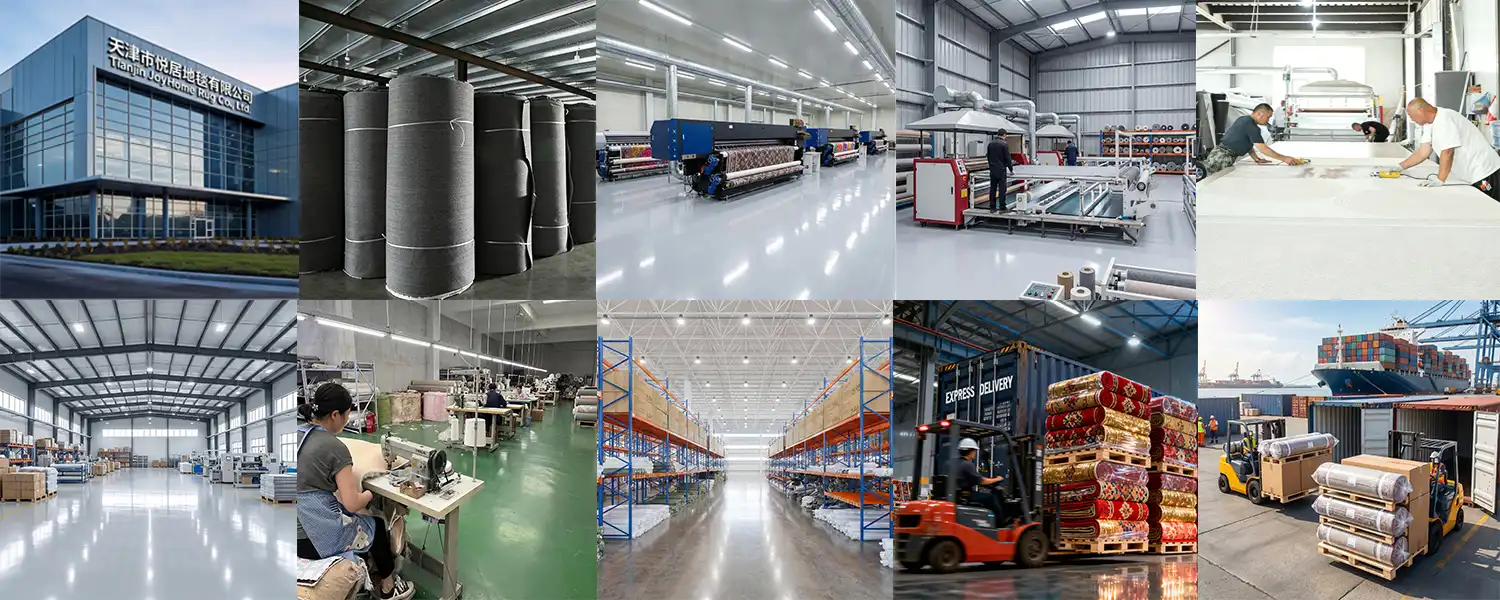
To find trusted cobblestone bath mat providers, you need to look at more than just the product specs. The ability of a supplier to make things determines whether they can keep quality high over long production runs and meet specific needs without taking too long to make things. JoyHome has a 20,000-square-meter factory with 25 high-tech production systems, such as precision laser cutting and heat transfer printing, which lets them make 2,000 square meters of products every day. This level of production makes sure that big projects are delivered on time, and it also gives us the freedom to make unique models in 24 to 48 hours.
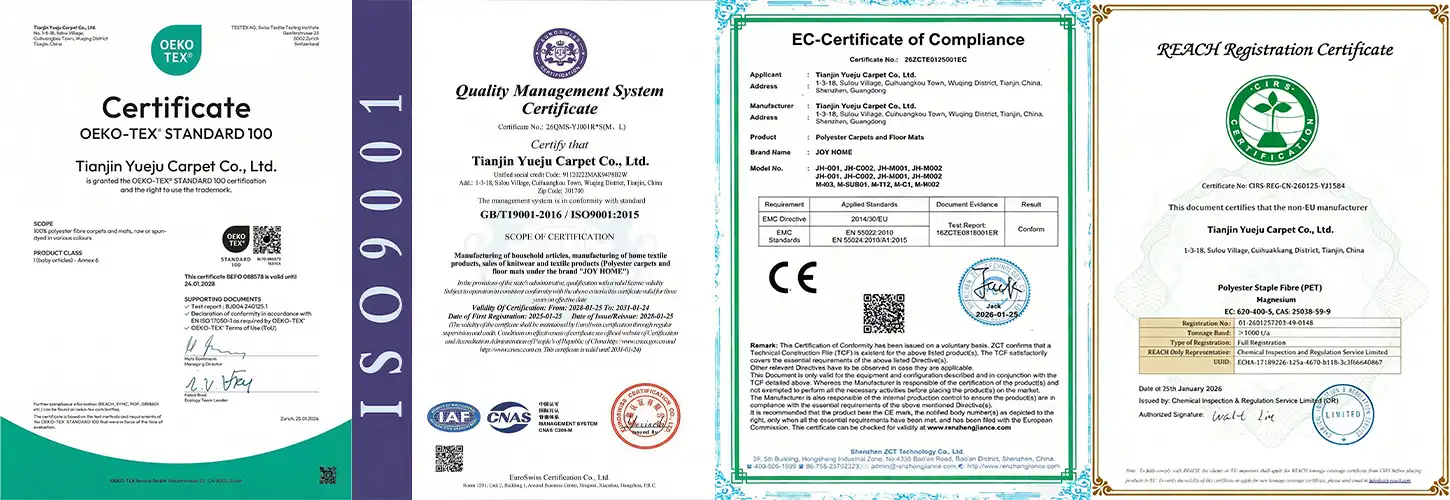
Documentation that certifies something is an objective confirmation of safety claims and environmental commitments. CE marking shows that the product meets European safety standards, and OEKO-TEX Standard 100 certification shows that the materials meet strict human-ecological requirements. These certifications lower the risk of buying from foreign cobblestone bath mat makers. Product entries should include slip-resistance and material durability reports from a third party. This way, buyers can check performance claims through independent proof instead of just believing what the seller says.
Wholesale and Customization Advantages
When you buy in bulk, you can get better prices that have a big effect on the economics of the job. When compared to retail prices, volume buys usually cut per-unit costs by 20–40%. This helps sellers make more money and helps end users stick to their budgets. In addition to lower prices, buying in bulk lets you make changes that would be hard to do for small orders, like customizing the size, adding a logo for a hospitality brand, or matching the color to match the interior design.
JoyHome's OEM/ODM services help stores build their own brands when they want to make their own product lines. Unique design options range from simple color choices for solid and printed options to fully unique patterns that set market offers apart. This versatility is especially helpful for interior designers who need to make sure that bathroom items match across multiple properties or for stores that are making their own home safety collections. Flexible minimum order quantities allow both established distributors who place full container loads of orders and new businesses that want to see how the market responds with smaller initial commitments.
After-Sales Support and Logistics
Professional sellers are different from transactional vendors because they offer reliable help after the sale. Clear ways to communicate, quick technical support, and clear return policies all help build the trust that is needed for long-term partnerships. Procurement professionals should check how responsive a supplier is during the initial questions. Quick, detailed answers to technical questions show what kind of support they can expect throughout the relationship.
Logistics skills have a direct effect on how quickly projects are finished and how well materials are managed. Export-standard packaging keeps goods safe while they're being shipped internationally and makes the best use of containers to cut down on freight costs. Buyers can choose formats that work with their storage and shipping systems because there are many packaging options, such as roll packaging and carton configurations. JoyHome's 7–15 day bulk order fulfillment timeline works with just-in-time stocking methods, which keep stock levels high while lowering the cost of storage. This operational efficiency, along with the inspection paperwork that comes with every shipment, speeds up the receiving process and makes it easier for buyers to keep an eye on quality.
Conclusion
Biomimetic texture design and improved moisture-management materials in cobblestone bath mats make them less likely to slip, which is an engineering answer to a long-standing bathroom safety problem. Compared to other options, they work better because they have built-in safety features like three-dimensional grip surfaces, quick-drying construction, and universal-compatibility rubber backing that keep working well for a longer time. Professionals in procurement can get safety solutions that can be changed to fit different environmental needs and still meet compliance standards and sustainable goals. Choosing good suppliers with a history of making things, clear certification, and a wide range of support services is the best way to make sure that both home and business projects go smoothly.
FAQ
Can cobblestone textured mats be used outdoors near pool areas?
Good cobblestone bath mats with rubber backing work well in covered outdoor areas, but they need to be kept out of direct sunlight, which breaks down rubber compounds over time. They work great in changing rooms by pools and spas where keeping people dry and preventing slips are important.
How frequently should commercial facilities replace these mats?
Replacement times rely on how much traffic there is and how hard the repair is. Bathrooms in hotels that get a lot of use need to be replaced every 18 to 24 months, but bathrooms in offices that don't get used too much can last for 24 to 36 months with proper care. Texture softening or backing wear that can be seen is a sign that the item needs to be replaced.
Are custom branding options available for hospitality clients?
Full customization services include adding logos, matching colors exactly, and creating your own patterns. Custom branding has different minimum order amounts depending on how complicated the design is. However, mid-sized hospitality groups can still afford them because the production process is flexible enough to meet specific needs without setting too high volume requirements.
Partner with JoyHome for Premium Slip-Resistant Bath Mat Solutions
Partner with a reliable cobblestone bath mat supplier that is dedicated to engineering excellence and customer success to raise the safety standards in your bathroom. JoyHome offers customizable safety options that are backed by CE and OEKO-TEX standards. They have been making textiles for 20 years and use cutting-edge production technology. Our method is flexible enough to meet the needs of a wide range of projects, from shipping samples within 48 hours to finishing mass production in two weeks. Email our team at admin@longtengmen.com to talk about custom sizes, different materials, and wholesale prices that fit your needs.
References
1. American National Standards Institute. "ANSI/NFSI B101.1 Test Method for Measuring Wet DCOF of Common Hard Surface Floor Materials." National Floor Safety Institute, 2022.
2. Chen, Michael T., and Patricia Rodriguez. "Biomimetic Surface Textures in Safety Flooring: Engineering Principles and Performance Outcomes." Journal of Materials Safety Engineering, vol. 47, no. 3, 2023, pp. 178-194.
3. International Organization for Standardization. "ISO 13287:2019 Personal Protective Equipment — Footwear — Test Method for Slip Resistance." ISO Standards Catalogue, 2019.
4. National Safety Council. "Injury Facts: Preventable Deaths and Injuries in Home and Community Environments." NSC Research and Statistical Services Department, 2023 Edition.
5. Patterson, James R. "Diatomaceous Earth in Moisture-Management Applications: Material Properties and Commercial Implementations." Advanced Sustainable Materials Quarterly, vol. 12, no. 2, 2022, pp. 88-103.
6. U.S. Consumer Product Safety Commission. "Bathroom Safety for Older Consumers: Statistical Analysis of Emergency Department-Treated Injuries." CPSC Safety Report Series, Publication 5098, 2023.
Online Message
YOU MAY LIKE
High quality furniture manufacturer