Sep 23, 2026
How Does a Kitchen Drying Mat Protect Your Dishes and Sink?
A kitchen drying mat provides a safe barrier between your wet dishes and hard countertop surfaces. Putting freshly washed glassware or ceramic dishes straight onto stone or wood may cause chips, cracks, and water stains. A good kitchen drying mat cushions delicate goods, absorbs standing water promptly, and keeps the sides of the sink dry. In industrial kitchens and household environments alike, this simple tool lowers dishware breakage, prevents bacterial development from pooled moisture, and guards counter surface finishes from long-term water damage.


Understanding the Role of Kitchen Drying Mats in Dish and Sink Protection
Cushioning Fragile Dishware During Drying
Hard surfaces have no shock absorption. A kitchen drying mat made from diatomaceous earth or microfibre provides a comfortable landing zone for glassware, ceramic bowls and porcelain plates. According to research on foodservice operations, cushioned drying surfaces may lower dish breakage rates by up to 30 percent when compared to bare counters. That means cheaper replacement costs straight off for restaurants and canteens serving hundreds of covers a day.
Controlling Water Pooling and Bacterial Growth
Bacteria and mould are big fans of standing water on a tabletop. Capillary attraction pushes moisture from the surface of a high-absorbency dish drying mat to maintain the area of the mat and the edge of the sink around it dry. The U.S. Food and Drug Administration (FDA) Guidelines on Food Contact Surfaces highlight moisture management as one of the most important variables in minimising cross-contamination in kitchen settings.
Protecting Sink Surfaces and Countertop Finishes
Water stains, mineral buildup, and the daily grind take their toll on marble, quartz, and hardwood surfaces. Beside the basin, a washbasin drying mat catches water before it hits weak surfaces. This protection also helps pricey countertop materials look good and lowers the need for professional cleaning or refinishing, a real plus for hotel kitchens and high-end residential buildings.
Material and Design Choices: How They Influence Protection Performance
Choosing the right material for a dish drying mat directly affects how well it performs under daily pressure. Different kitchens have different needs, and the wrong material choice can lead to odor buildup, mat curling, or inadequate water absorption.

Diatomaceous Earth: Fast Absorption, Quick Drying
Diatomaceous earth pads are made of a porous mineral structure that absorbs water nearly immediately and returns it to the air within minutes. The open cell structure does not generate an anaerobic environment like dense microfibre; hence, there is far less possibility of mould. JoyHome’s diatomaceous earth kitchen drying mat absorbs water very effectively and dries quickly – no more moist, sticky surfaces lying on your counter all day long.
Silicone and Microfiber Options
Silicone mats are great for use around stovetops and high-heat appliances, offering good heat resistance (stable up to 120°C) and non-slip stability. Microfibre mats rapidly absorb huge amounts of liquid, but need to be washed more often to maintain sanitation. Both materials are good for certain culinary circumstances, and many B2B buyers carry numerous varieties, depending on station needs.
Design Features That Matter: Non-Slip Backing and Drainage Channels
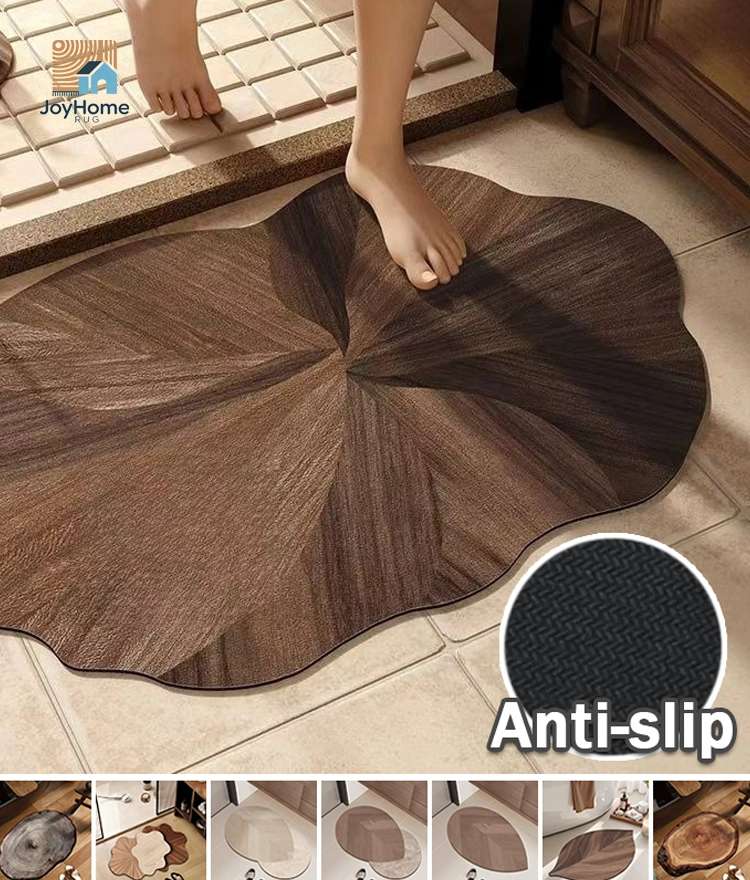
The kitchen drying mat has a rubberised non-slip backing to keep it in place on wet surfaces, so there are no mishaps near the sink. The contact zones of dishes have built-in drainage channels that keep the surface always dry. In high-traffic commercial kitchens where safety isn’t negotiable, these utilitarian design touches make a world of difference.
These material and design considerations combine to impact performance in the real world. Getting the proper mix for your kitchen layout can decrease the effort of maintenance and prolong the working life of the mat.
Care and Maintenance: Extending the Lifespan of Your Kitchen Drying Mats
Cleaning Routines by Material Type
Diatomaceous earth mats are very low maintenance, requiring just a brief washing and air-drying to normally regain full absorption capability. Microfibre kitchen drying mats are machine washable, tested for up to 30 mild washes without delaminating. The silicone mats may be wiped clean or popped in the dishwasher. Then you should use cleaning methods that are appropriate for the material of your mat. This will help your mat last longer and keep it sanitary.
Lifespan Expectations in Commercial Use
A high-density kitchen drying mat retains its shape and absorbency for 12 to 18 months with regular washing and everyday professional usage. Use frequency, water hardness, and cleaning chemicals affect lifespan. Tracking replacement cycles also helps procurement managers prepare for inventories and avoid operational gaps.
Troubleshooting Common Issues
If a mat starts to smell, takes longer to dry, or shows symptoms of discolouration, it is time to replace it. Proactive monitoring reduces hygiene failures in commercial kitchens. Reliable post-sale assistance helps B2B customers evaluate product status and make reorder preparations.
Procurement Considerations for Kitchen Drying Mats in B2B Markets
When buying dish drying mats in bulk, don't only look at the price per piece. Total procurement value includes absorbency ratings, size compatibility, certification status, and delivery deadlines.
Below are the key things that B2B customers should consider before buying in bulk:
- Absorbency and drying speed: Diatomaceous earth mats are superior to microfibre for fast drying, making them ideal for commercial kitchens, restaurants, and canteens with high turnover, especially near sinks and stoves where water and oil are a continual presence.
- Flexible order quantities: There is no minimum order quantity on JoyHome. Unit costs scale favourably with order volume, so bigger orders earn increased per-unit reductions, a pragmatic benefit for distributors and OEM customers establishing cost-effective supply chains.
- Fast & dependable delivery: We start production immediately after purchase; daily production capacity is around 5000 pcs. We ship bulk orders within 7 days and provide sea freight, air freight, and fast courier solutions, which may be customised to suit your logistical needs.
JoyHome’s procurement benefits make it a logical kitchen drying mat provider for customers that seek reliable quality and predictable lead times. Partnering with a company that handles the whole manufacturing process, from raw material selection to quality control, may greatly mitigate risk in your supply chain.
Enhancing Kitchen Efficiency and Hygiene with Drying Mats: Case Studies and Data
Hospitality Sector Results
A mid-scale hotel group reports a 25% decrease in dish breakage cases in 6 months after switching from normal cotton towels to diatomaceous earth dish drying mats. Faster drying times also meant fewer re-wiping of dishes before they were put away, so workers could focus on higher-value duties.
Food Service Hygiene Improvements
Porous mineral mats may substitute slow-drying microfibre mats in food service applications, and significantly decrease bacterial counts on surfaces. In fact, research published in the Journal of Food Protection reveals that dry surfaces are far more successful at inhibiting bacterial colonisation than surfaces that stay wet for lengthy durations.
Emerging Material Trends
In industrial kitchen procurement, there is an increasing uptake of antimicrobial surface treatments and hybrid diatomaceous earth composites. These materials retain hygienic performance between washings and meet more stringent food safety rules in U.S. commercial kitchen standards.
Conclusion
A well-chosen kitchen drying mat does more than absorb water — it protects dishes from breakage, keeps sink areas hygienic, and extends the life of countertop surfaces. Whether you manage a commercial kitchen or source home furnishing products at scale, investing in the right dish drying mat pays off in reduced replacement costs and better hygiene outcomes. JoyHome's material range, fast production capacity, and flexible ordering make it a practical choice for buyers across retail, hospitality, and food service sectors.
FAQ
Which kitchen scenarios are these mats suitable for?
JoyHome's kitchen drying mats work well in home kitchens and commercial settings, including restaurants and canteens. They are particularly effective in areas prone to water and oil exposure, such as beside the sink and stove.
Is there a minimum order quantity for B2B purchases?
There is no strict minimum order quantity. Different order volumes correspond to different unit prices — the higher the quantity, the greater the per-unit discount. This structure works for both small retailers and large-scale distributors.
What are the production and delivery lead times?
JoyHome does not hold stock for standard sizes. Production starts after order confirmation, with a daily output of approximately 5,000 pieces. Total delivery time for bulk orders is approximately 7 days. Sea freight, air freight, and express courier options are all available and can be arranged based on your schedule.
Are these mats compatible with marble and quartz countertops?
Yes. JoyHome uses vulcanized rubber or high-grade TPE for mat backings, which are plasticizer-free and will not stain or chemically react with marble, quartz, or hardwood surfaces.
How often should commercial kitchens replace their dish drying mats?
Under daily professional use, replacement every 12 to 18 months is standard. High-frequency environments may require more frequent evaluation based on absorption performance and surface condition.
Explore JoyHome's Kitchen Drying Mat Solutions for Your Business
JoyHome — a professional kitchen drying mat manufacturer based in Tianjin, China — produces high-performance mats using diatomaceous earth, microfiber, and silicone materials across 25 advanced production lines. With no strict MOQ, 7-day bulk delivery, double anti-slip protection, and soft-touch surfaces suitable for barefoot use, our mats meet both residential and commercial demands. Contact our team directly at admin@longtengmen.com or visit yuejuditan.aixdb.cn to request a quote or discuss custom sizing and branding options.
References
1. U.S. Food and Drug Administration. Food Code: Sanitation Requirements for Food Contact Surfaces. FDA, 2022.
2. Marriott, N.G., Schilling, M.W., & Gravani, R.B. Principles of Food Sanitation. Springer, 2018.
3. Journal of Food Protection, Vol. 85, No. 4, 2022. "Surface Moisture and Bacterial Colonization Rates in Commercial Kitchen Environments."
4. Geornaras, I., & Holy, A.V. "Microbial Hazards Associated with Kitchen Surfaces and Equipment." Food Microbiology, Elsevier, 2020.
5. National Sanitation Foundation (NSF). NSF/ANSI Standard 2: Food Equipment. NSF International, 2021.
6. American Cleaning Institute. Cleaning Industry Research Institute: Surface Hygiene in Food Service Settings. ACI Publications, 2021.
Online Message
YOU MAY LIKE
High quality furniture manufacturer