Sep 24, 2026
How to Choose a Corridor Rug Runner for High-Traffic Spaces?
When shopping for the perfect corridor rug runner for a hallway rug, one has to strike a balance between durability of the material, precision of the sizing, resistance to slippage, and ease of maintenance. In high-traffic passageways (hotel corridor, corporate office gallery, lively home entrance) a professional hallway runner protects your flooring, absorbs foot noise, and defines the visual flow of a space. It will also help protect your flooring from other potential threats. These are all examples of corridors with a lot of foot activity. Pick the wrong ones, and you might be looking at premature wear, safety issues, and costly replacements. This guide will train you through all selection points so that you will be able to buy with self-confidence.

Understanding Corridor Rug Runners and Their Benefits
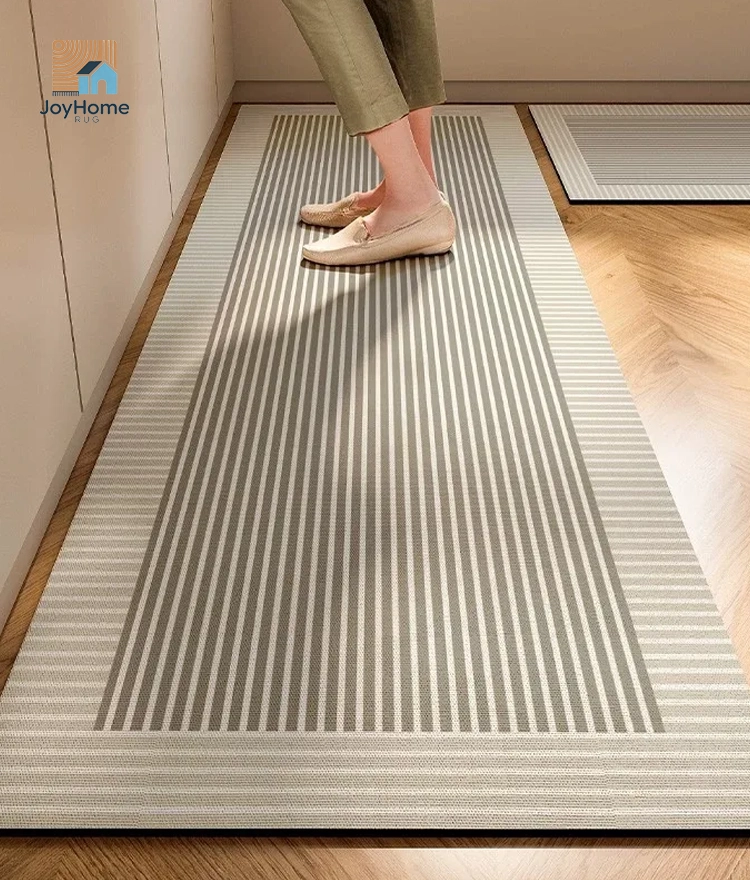
A hallway rug runner is more than just a pretty piece of cloth. It’s a purpose-built surface that can bear focused, linear foot traffic that would soon destroy typical area rugs or bare floors.
Floor Protection and Longevity
In corridors, high-frequency foot activity creates wear patterns that cause surface finishes to break down over time. A good selection of passage runners will assist in absorbing this impact and keep the flooring below it. The Carpet and Rug Institute (CRI) has undertaken research that demonstrates as much as forty percent less surface abrasion occurs on carpeted aisles than on bare hard floors when the same amount of traffic is exposed to both under the same circumstances.
Acoustic and Thermal Performance
Loop pile corridor rug runners prevent chilly air from rising from the ground, keeping feet warm throughout the winter months. They also cut down on the echo that happens in long hallways, a major benefit in corporate office and hospitality environments where background noise may impact productivity and visitor comfort.
Safety and Aesthetic Value
According to the National Floor Safety Institute (NFSI), slip-and-fall liability is one of the leading causes of workplace injury in the United States. Anti-slip backing and anti-curl edges minimise the possibility of slip-and-fall liability. The role of a runner is not limited to safety and interior design themes, and in commercial settings carrying branded designs that communicate business identity.
Key Criteria to Consider When Choosing a Corridor Rug Runner
Procurement managers working across retail, hospitality, or institutional sectors need a structured checklist before placing orders.
Material Selection
How a corridor runner ages under pressure is determined by the material it is made of. This is a list of the major choices that should be considered:
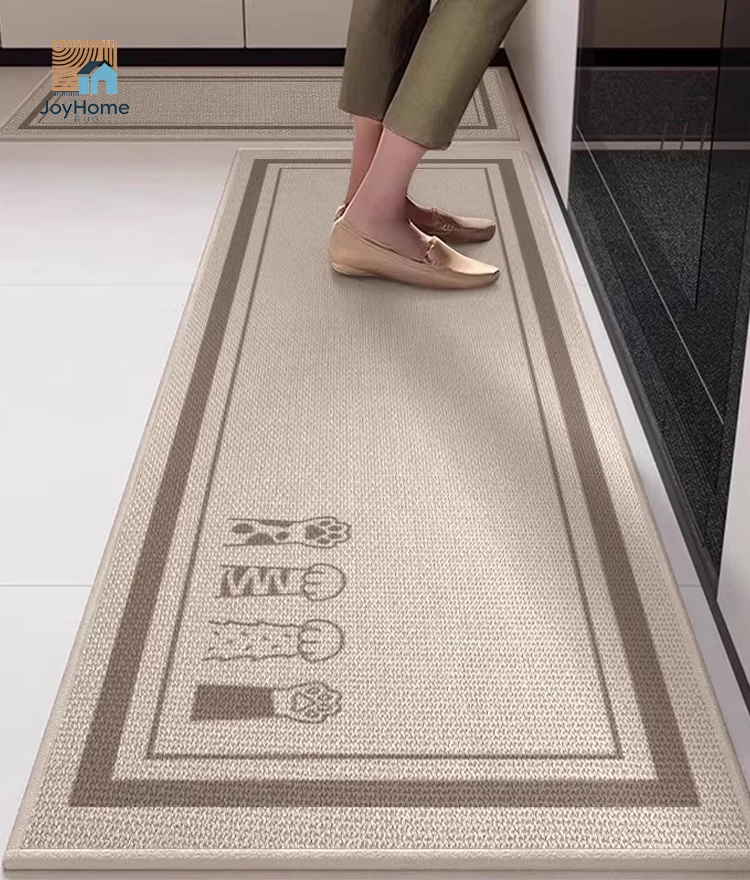
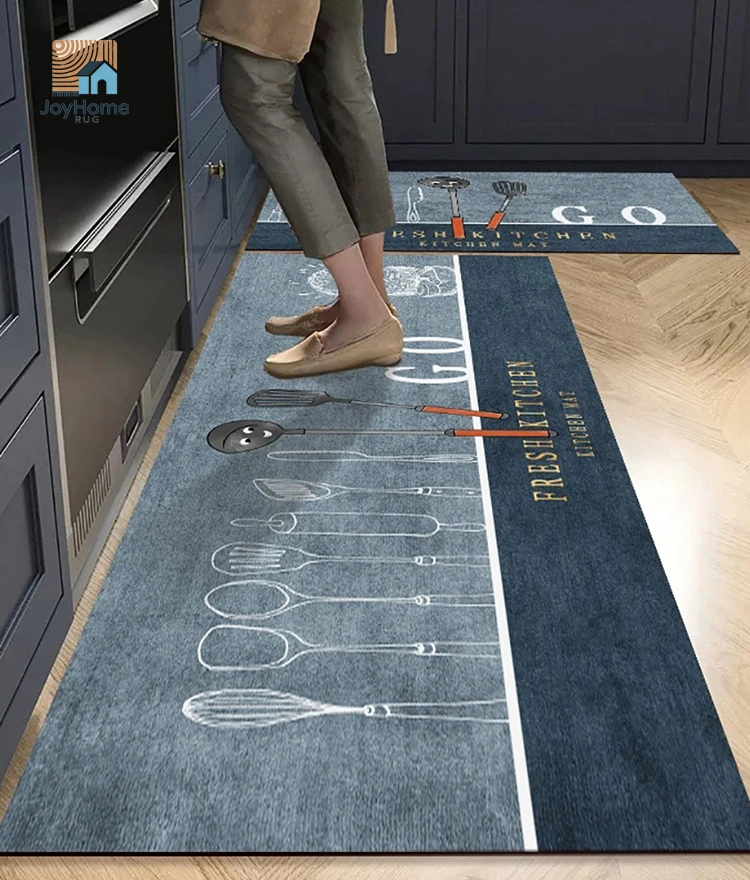
- Loop pile is a synthetic mix that is resistant to pilling and distortion. Loop pile is soft while maintaining a physically compact structure. As a result of its flexibility, it efficiently moderates foot pressure, making it perfect for use in environments such as workplaces, living rooms, kitchens, and supermarkets where employees or customers stand for lengthy periods of time. Because of the tight weave structure, it is also dimensionally stable, meaning that it maintains its flatness even after months of regular use.
- Polyester is a material that is simple to clean, resistant to stains, and cost-effective. When budget control is a top issue, this is the ideal solution for high-volume buying.
- Wool mixes are naturally tough and long-lasting, although they often come at a premium price range. Better suited for locations that are associated with elite hospitality.
The process of matching a material to its surroundings is a phase that cannot be negotiated since each material has its own set of trade-offs between its initial cost, the frequency of maintenance, and the estimated lifetime.

Sizing and Fit
If you’re not fitted for it correctly, it might be a trip hazard and look wrong. Measure the width and length of your hallway very carefully. Commercial hallway runners usually come in widths between two and four feet. However, special sizing is occasionally necessary for projects in the hotel or institutional sectors where corridor lengths may vary substantially.
Safety Standards and Certifications
If minimal VOC emissions are a requirement, especially in healthcare and office environments, look for runners with CRI Green Label Plus certification. The anti-slip backing and low-profile pile height (less than 0.5 inches) reduce the rolling resistance for wheelchairs and service carts, a requirement in places designed to meet the Americans with Disabilities Act (ADA).
Comparing Types and Styles of Corridor Rug Runners for High-Traffic Spaces
Understanding how a runner is manufactured helps you judge whether it will hold up under real-world conditions.
Machine-Made vs. Handmade
Machine-made corridor rug runners provide regular pile density, dependable quality control, and shorter production cycles – essential benefits for B2B procurement on tight schedules. The handmade alternative has aesthetic prestige, but density might vary, and it is seldom cost-effective for big commercial orders.
Style and Branding Compatibility
A hallway runner’s visual style should match the surroundings in which it is placed. Corporate workplaces usually choose geometric or solid-tone designs that blend perfectly with contemporary décor. They like designs like Axminster hotels, which conceal stains yet hint at opulence. OEM customers may have brand colours and logos woven directly into the runner design with bespoke pattern weaving.
Established Brands and Supplier Benchmarks
Others, such as Safavieh, Mohawk, and nuLOOM, have set the quality standards in the North American market. They provide warranty coverage and stable supply channels, reducing procurement risk. Before placing big orders, ask any supplier of corridor rug runners for verified quality certificates, manufacturing capacity statistics, and sample swatches.
Evaluating Product Offerings and Making Your Procurement Decision
Once you define your material, size, and style requirements, the supplier evaluation process begins.
Wholesale Pricing and Volume Incentives
B2B purchasers should ask for tiered pricing structures. A lot of manufacturers will give you a bulk discount if you buy 50 to 100 pieces. A blanket order agreement secures price and priority production scheduling for recurrent purchases like yearly hotel renovations.
Customization Capabilities
OEM and ODM collaboration is very important for customers that are creating private label product lines for a corridor rug runner. A professional producer of hallway runners should provide full-service customisation from the pattern design to the pile structure, the backing type, the edge-locking mechanism, and branded packaging. Check to see if there is an MOQ for special specs, or if the vendor is make-to-order.
Delivery, Returns, and After-Sales Support
Lead time has a direct impact on the project schedule. Good vendors can supply standard specs within a week. Make sure to check the return rules for damaged items and ask the provider for a formal warranty term. In B2B contracts, a 2-3 year product guarantee on runner durability (i.e. pilling, deformation, and edge integrity) is a fair baseline for quality assurance.
Final Recommendations and Best Practices for Procurement Managers
A structured procurement approach prevents costly errors and builds long-term supplier relationships.
Define Requirements Before Sourcing
Document your corridor dimensions, expected daily foot traffic volume, safety certification requirements, and design preferences before contacting suppliers. This preparation shortens negotiation cycles and reduces specification errors.
Request Samples and Conduct Field Tests
Always test tangible samples in real circumstances before accepting a big corridor runner order. Test pile recovery following compression. Backing grip according to your particular floor type and colourfastness under cleaning products you currently use operationally.
Build a Maintenance Schedule
Even the most durable passage runner needs a maintenance schedule. High-traffic corridor runners will benefit from professional thorough cleaning every 6-12 months, in addition to regular vacuuming. Loop pile structures are especially beneficial here. Their dense structure collects less surface material and surrenders dirt more readily in the cleaning cycle.
Conclusion
Choosing the ideal corridor rug runner for high-traffic areas requires careful consideration of material durability, correct size, safety compliance, and the dependability of the provider. Loop pile designs provide a good combination of anti-fatigue cushioning, dimensional stability, and minimal maintenance for commercial situations. Buyers safeguard their budget and their end customers by matching buying selections to specified specifications and field-verified samples. The correct hallway runner isn’t an afterthought – it’s a functional asset that operates regularly under challenging circumstances.
FAQ
How often should a commercial corridor rug runner be replaced?
Under heavy daily traffic, most commercial-grade hallway runners last 3–7 years before visible wear compromises appearance and safety. Loop pile constructions with firm edge-locking tend to outperform cut pile at the higher end of that range. Establishing an inspection schedule every 12 months helps procurement teams plan replacement budgets proactively.
Is custom sizing cost-effective for large commercial projects?
Yes. For large-scale institutional or hospitality procurement, custom-sized corridor runners reduce off-cut waste and eliminate the need for multiple overlapping pieces that create seam hazards. Suppliers supporting on-demand customization without strict MOQ restrictions make custom sizing financially practical even for mid-scale projects.
What safety certifications should I prioritize?
For U.S. commercial environments, prioritize CRI Green Label Plus (low VOC emissions), NFSI High Traction certification for slip resistance, and, where applicable, ADA compliance for pile height and edge transition standards. For healthcare corridors specifically, ask suppliers about antimicrobial treatments and impervious moisture barrier backing options.
Partner with JoyHome for Your Next Corridor Rug Runner Order
JoyHome is a trusted corridor rug runner manufacturer based in Tianjin, China, operating a 20,000 m² production facility with 25 production lines. We support full OEM/ODM customization with no restrictive MOQ, deliver standard specifications in as little as one week, and back every product with a 2–3 year warranty. Contact our team at admin@longtengmen.com or visit yuejuditan.aixdb.cn to request samples and wholesale pricing tailored to your project scale.
References
1. Carpet and Rug Institute (CRI). Carpet Performance and Maintenance Standards. 2022.
2. National Floor Safety Institute (NFSI). Walkway Auditing Standard B101.1. 2021.
3. American Society of Interior Designers (ASID). Commercial Flooring Specification Guide. 2020.
4. U.S. Green Building Council. LEED v4.1 Interior Materials and Resources Credit Guide. 2023.
5. Floor Covering News. Commercial Carpet Trends in Hospitality and Healthcare. 2022.
6. Buildings Magazine. High-Traffic Flooring: Specification and Lifecycle Cost Analysis. 2021.
Online Message
YOU MAY LIKE
High quality furniture manufacturer