Jun 12, 2026
How to Choose Ruggables for Living Room Spaces?
When choosing ruggables for living room use, you need to think about how they will look and how long they will last. Companies have changed how they cover floors in high-traffic areas of companies and homes thanks to these new two-piece flooring systems. The top layer can be taken off and washed in a machine. When combined with the non-slip pad, it makes this type of rug a great option to standard solid rugs, especially for procurement professionals who are in charge of properties that need to be cleaned often. This complete guide looks at important selection criteria, such as the make-up of materials, performance metrics, and bulk purchasing strategies. It does this so that interior designers, retailers, hospitality managers, and facility coordinators can make smart buying decisions that meet operational needs and stay within their budgets.

Understanding Ruggables for Living Rooms: Features and Benefits
The Two-Piece Innovation That Solves Industry Pain Points
Ruggables for living room setups work with a patented modular design that includes a light cover and a separate pad for grounding. The top layer is usually made of low-pile polyester fibres, which are often fake cashmere in high-end brands and are designed to be stain-resistant and dry quickly. Although this 3 mm short pile structure keeps dust from building up, it still feels luxurious, like natural fibres. The thermoplastic rubber (TPR) backing on the base pad creates friction against tile, hardwood, and vinyl surfaces without leaving behind any sticky waste. This keeps the pad stable even when it's being walked on a lot. The biggest benefit comes from the cost of upkeep. In business settings, a professional needs to steam clean traditional broadloom rugs every three months. This costs about $150 to $300 per treatment for normal living room sizes. Washable alternatives eliminate this ongoing cost; machine washing costs less than $2 in energy. This reduction means big savings for deployments in multiple places. This approach is especially helpful for property management companies and hotel groups that are trying to make ends meet.
Material Science Behind Commercial Performance
Modern ways of making things at places like Tianjin JoyHome Rug Co., Ltd. use laser cutting and heat transfer printing to create designs that stay true to their colours for business use. The surface that looks like cashmere is as soft as real animal fibres, but it still has polyester's natural resistance to organic solvents and acidic spills, which is important in places that serve food and drinks. The TPR backing doesn't slip and can handle temperatures up to 50°C. This means that these rugs can be used with radiant floor heating systems, which are becoming more popular in modern businesses.
Environmental concerns are also critical. A polyester structure lets you recycle it in a closed loop at the end of its life, which is in line with business sustainability goals. The longer service life—rated for 60 to 100 wash cycles before noticeable wear—means that it doesn't need to be replaced as often as wool or jute alternatives, which wear out quickly in industrial laundry settings. Washable systems are very appealing to business buyers with long-term capital budgets because they are designed to last.
Acoustic and Comfort Benefits for Professional Spaces
In addition to making rooms cleaner, these floor covers also make open-concept living areas quieter. When you combine pile density with TPR padding, they absorb impact sound and lower background noise by 15 to 20 decibels. This is an important thing to think about for places like business bars and co-working greeting areas where noise levels affect people's happiness. The low-profile design (about 7 mm total height) keeps people from tripping and allows standard door openings, so you don't have to pay a lot of money to change the thresholds for thicker traditional rugs.
The polyester-TPR mix has an R-value of 0.8, which isn't very high but is useful for large-footprint uses because it helps keep the HVAC system cool. Facility managers who keep track of energy use data across business portfolios will like this feature.
Key Criteria for Selecting the Best Ruggables for Your Living Room Project
Dimensional Planning for Varied Commercial Layouts
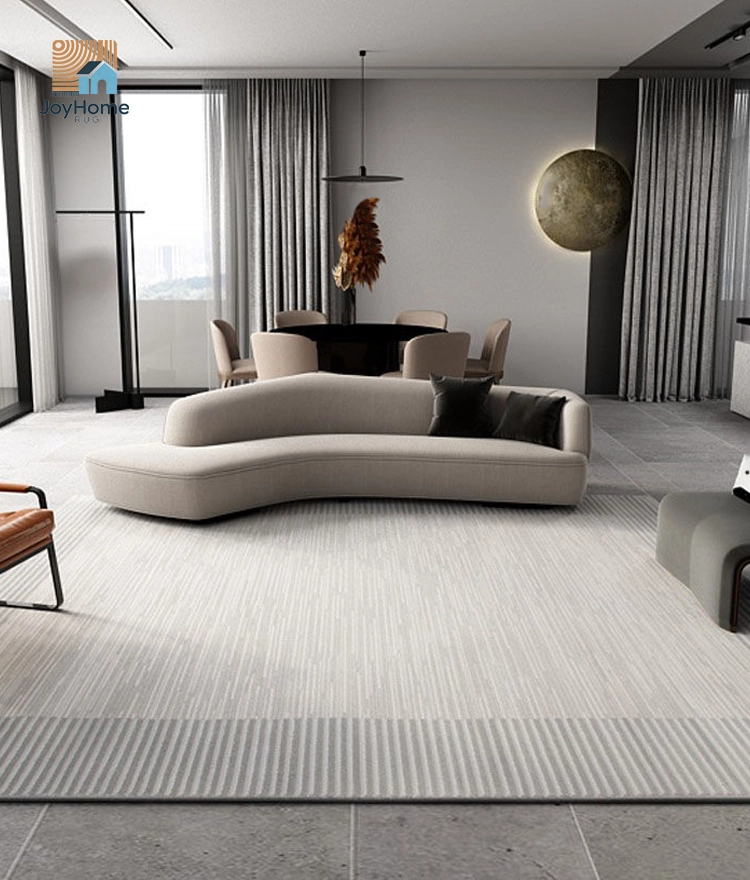
Getting the right size is the first step to making good use of the room. Different uses require unique living room sizes. For example, boutique hotel halls, which are usually 300 to 500 square feet, need very different sizes than small business break rooms, which are usually 150 to 200 square feet. As a general rule, floor covers should go at least 18 inches past the edges of furniture to make the room look better. However, they should still be 8 to 12 inches away from walls to keep them from curling in wet places.
When floor plans aren't straight, the ability to customise sizes becomes very important. Manufacturers with open MOQs (minimum order numbers) make it possible to get non-standard sizes without having to pay the higher prices that come with custom production. JoyHome's laser cutting technology can meet specific needs and send items in as little as one week, which is particularly advantageous for business retrofits where projects need to be finished quickly.
Material Selection Aligned With Traffic Patterns
Knowing the standards for wear protection keeps you from having to replace things too soon. Commercial-grade washable rugs list fibre denier grades. Lower numbers mean smaller threads that are good for executive offices with low foot traffic, while higher denier (600–800) construction can handle the wear and tear of lobby areas that get 500 or more foot traffic every day. When these conditions happen, imitation cashmere surfaces with TPR backing keep their shape better than natural fiber options that tend to mat.
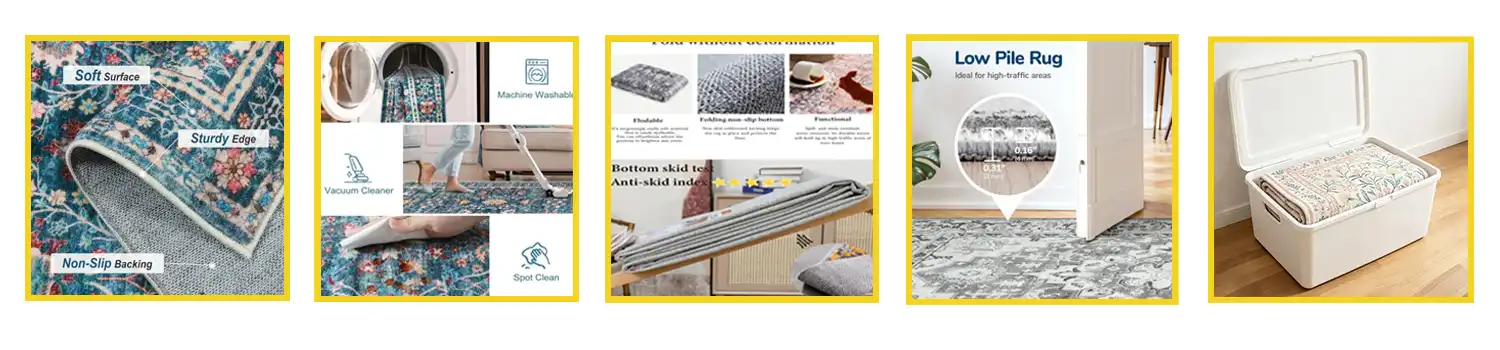
Maintenance intervals are directly related to stain protection scores. Polyester naturally repels water-based spills, but oil-based contaminants need to be treated on the surface. Premium lines of clean rugs have fluorocarbon finishes that stay effective through 20 to 30 launderings before they need to be reapplied, which is an important requirement for areas that are close to food service.
Performance Metrics That Determine Lifecycle Costs
When you make sure something can be washed, you keep buyers from being disappointed. Commercially washable floor covers can go through 40°C machine cycles without shrinking more than 3%, losing fibres, or bleeding colour. Professionals in charge of buying things should ask for third-party test certificates that show these parameters, because low-quality items that are sold as "washable" may break down quickly, losing the cost savings they offered at first.
Noise reduction is especially important in houses with more than one floor. The Impact Insulation Class (IIC) number tells you how much sound is being transmitted. Good quality washable rugs with TPR backing get IIC ratings of 60 to 65, which are the minimum standards for domestic applications above occupied places according to the International Building Code. Developers who are turning business buildings into mixed-use properties need to pay attention to this standard.
Aesthetic Integration With Corporate Identity
Style adaptability includes more than just choosing a pattern. It also includes keeping the same colour and feel across different amounts of production. For large-scale deployments, dye-lot matching promises are needed to make sure that the look is the same when orders come from more than one supplier. Advanced makers like JoyHome use digital printing technologies that allow them to match colours exactly to Pantone standards. This helps create branded interior settings.
The design is foldable and won't crease, so goods can be stored without needing a separate warehouse. This is helpful for stores and e-commerce distributors who have to keep track of a lot of different SKUs. Unlike traditional rolled mats that need to be stored in a climate-controlled space, these goods can be folded up and stored for 6 months or more without losing their quality. For those choosing the best Ruggables for the living room, this flexibility is essential.
Comparing the Top Ruggable Options: A Decision-Making Framework
Cost-Benefit Analysis Across Washable Rug Categories
There are different price ranges for washable rugs based on the quality of the materials used and the features they have. Basic polyester blends with sewn-on rubber backing are used in entry-level goods that are 8 to 150 dollars for normal 5'x7' sizes. Premium synthetic fibres, like fake cashmere and moulded TPR pads, are used in mid-range ($150–$250) products. Luxury products that cost more than $300 have expert printing methods and higher pile density.
The most important evaluation measure is still cost-per-use, not starting cost. A $200 washable rug that lasts 80 washes over the course of 5 years in a business setting costs $2.50 each time it is washed. A $150 traditional rug that needs to be cleaned by a professional every three months costs $1,200 in upkeep costs over the same time period. This fact of the economy drives growth among big buyers who are careful with their budgets when evaluating Ruggables for living room options.
Industry Reputation and Service Quality Considerations
The terms of the warranty show that the maker trusts you and protects you from taking legal action. Reliable sellers offer one- to two-year guarantees that cover structural flaws like the backing layer coming off and shrinking too much beyond the allowed limits. When a product fails during a multi-location rollout, these promises are very important for B2B buyers who are in charge of those locations.
Infrastructure for customer service has a direct effect on project timelines. Manufacturers who keep technical support teams that speak English and quick contact lines (with answer times of less than 24 hours) can avoid costly delays in deployment. JoyHome's full-chain service model, which includes design advice before the sale and support after delivery, is an example of the partnership approach that business clients value when handling complex requirements.
Value-Added Procurement Benefits
Strategic shopping takes advantage of buying in bulk. There are usually discounts for bulk orders of 10 or more items, and discounts of 15 to 25 per cent are available for orders over 50 items. OEM partnerships make it possible for stores and designers to sell branded goods without having to spend a lot of money on production infrastructure.
Fast shipping choices shorten the time it takes to finish a job. When manufacturers have local warehouses in target markets, they can fill orders in 3–5 business days, while it takes 4-6 weeks for exports to other countries. This organisational benefit is very helpful for renovation jobs that need to be finished by a certain date.
Custom design skills set providers apart. For business clients who need branded environmental design, advanced facilities with digital printing technology can handle custom patterns and image integration. JoyHome has a 25-unit equipment array that includes heat transfer printing systems that can make complicated drawings on a large scale for a low cost.
Procurement Guide: How and Where to Buy Ruggables for Living Rooms in Bulk
Sourcing Authentic Products Through Verified Channels
Verifying the maker is the first step in making sure the supply chain is honest. Working directly with companies like Tianjin JoyHome Rug Co., Ltd., which has a 20,000-square-meter building in Wuqing District, makes sure that the products are real and lets you discuss customisations that you can't do through multi-tier delivery networks. Furthermore, factory-direct ties get rid of markups, which makes prices 20–30% more competitive than through retail outlets. Finding authentic Ruggables for the living room through these channels ensures their quality.
Strategic Ordering for Large-Scale Projects
The first step in the custom size process is to provide exact measurements. By giving producers CAD floor plans, they can make the best use of materials, which cuts down on trash and the costs that come with it. JoyHome's engineering team offers pre-sale design assistance by offering the best rug placements that maximise aesthetic effect while minimising piece counts. This is an added value service that is especially helpful for designers who are coordinating installations in multiple rooms.
Plans for phased deliveries match up with building plans. Instead of sending one big package at once, which can put a strain on storage space, strategic procurement pros schedule deliveries at different times to match the stages of installation. This method lowers the cost of keeping and reduces the risk of damage from long-term storage. The MOQ rules are flexible enough to allow for this timing without any extra fees.
Maximising Value Through Supplier Partnerships
When you negotiate a volume deal, you should talk about the whole year's worth of purchases, not just one order. When you sign a favourite supplier deal with a maker, you agree to buy a certain number of units each year (500 or more) in exchange for better pricing, faster production, and personal account management. These relationships are especially helpful for property management companies and hotel groups that have ongoing programs to replace floors.
Optimising payment terms makes managing cash flow better. For long-term customers, suppliers who are sure of their quality may offer net-30 or net-60 payment terms instead of the usual pro forma billing, which needs payment in advance. This flexibility in operating cash is good for growing businesses that are working on several projects at the same time.
Infrastructure for after-sales help should be looked at. Make it clear how to file a guarantee claim, how long it takes to get a replacement for a broken item, and when expert help is available. Long-term relationships with suppliers like JoyHome that offer quick reaction procedures and full quality control certifications lower operating risk.
Practical Tips and Best Practices for Maintaining Ruggables in Living Rooms
Machine Washing Protocols for Commercial Applications
Setting up regular cleaning plans makes products last longer. Traditional rugs need to be cleaned by a professional every 90 days, but commercial washable floor covers can be machine washed every two to four weeks in high-traffic areas without getting worn down. Rugs up to 8'x10' can fit in a standard home washing machine when folded; rugs bigger than that need professional laundrette equipment. This is a vital part of taking care of Ruggables for living room installations.
If you prepare properly, you can avoid loss. Before washing, shake rugs outside to get rid of free dirt and dust. This lowers the sediment load on the machine's parts. Covers should be washed separately from other clothes to keep the dye from running and the lint from building up. Bleach and fabric softeners can damage the water-resistant barrier, so use light liquid cleansers instead. Setting the water temperature to cold or warm (30°C to 40°C) protects the fibres while thoroughly cleaning them.
Drying techniques affect dimensional stability. It is still best to let rugs dry naturally, either by laying them flat or spread over several lines to keep them from getting wrinkled. When using mechanical dryers, low-heat tumble processes keep polyester from melting and get rid of wetness faster. Because 3 mm short pile construction dries quickly, it only takes 4 to 6 hours for air to dry in mild humidity conditions, which is helpful for businesses that need to turn things around quickly.
Addressing Wear Patterns and Extending Service Life
Managing furniture depression keeps the look. High-density polyester fibres are strong, but heavy furniture that stays in one place for a long time leaves marks. Moving rugs around every three months spreads out the wear and tear, and the roughness of machine washing processes usually brings the pile height back to its original level. If the marks don't go away, steam treatment can help for a short time between launderings.
In places with low humidity, edge curling can happen sometimes. By keeping the relative humidity between 40 and 60%, you can keep the TPR backing from drying out too much, which would make it less sticky and cause the sides to lift. Using silicone-free edge weights for the first two weeks of the rug's life helps it learn to lie flat, which is especially important for large-format placements.
Robot vacuum compatibility needs to be checked every so often. Most robotic vacuums can fit because the design is low-profile and the sides are protected. However, models with rough brush rolls may snag the rug edges over time. This pattern of wear can be stopped by setting up virtual borders around the edges of the rug or moving to cleaning modes that only use suction.
Noise Mitigation Strategies for Corporate Environments
Strategic location improves the sound benefits. The best way to absorb noise is to put clean floor covers in sound reflection paths, like between hard floors and glass walls. The natural bulk of the TPR backing makes it a better impact sound barrier than the felt pads that are usually used with area rugs.
Layering methods make sound output stronger. Putting extra acoustic underlay under the rug pad can cut noise by 5 to 8 decibels in places that are already noisy, like open-plan offices and hotel hallways. This mixed system keeps the benefit of being easy to clean while getting closer to the performance of industrial carpet tiles.
Acoustic qualities can be kept up with regular care. Particles that build up in pile structures make them less effective at absorbing sound; regular cleaning plans bring back the original performance specs. Because it can be washed in a machine, the acoustic properties don't lose their effectiveness over time as they do with fully placed carpets.
Conclusion
When choosing washable floor covers for business living spaces, it's important to balance how the space should look with how it needs to work. With their modular design, Ruggables for the living room solved some of the biggest problems in the industry, like keeping upkeep costs low, making sure areas with a lot of foot traffic are clean, and being able to adapt to changing design needs. When purchasing managers look at these systems, they should give more weight to makers that can show technical skills like precise laser cutting, high-quality heat transfer printing, and advanced TPR backing formulations that lead to measured performance gains.
Choosing the right products is only the beginning of a successful adoption process. You also need to set up smart sourcing relationships, custom sizing processes, and preventative maintenance routines. The economic case is strong: better tenant happiness, lower cleaning costs, and longer replacement cycles are all reasons to spend more on high-quality washable systems. As sustainability and cleanliness continue to be emphasised in business design standards, these new flooring options are a step forward from traditional textile methods.
FAQ
Can machine-washable rugs withstand commercial traffic volumes?
Premium floor covers that can be washed and are made of high-denier polyester fibres and moulded TPR backing show wear resistance that is good for business settings that see more than 500 foot traffic every day. Products that can handle 60 to 100 washing cycles keep their shape and look better under these conditions, which is better than wool or cotton options that need to be replaced every 18 to 24 months in the same situations.
How can I figure out the right size for a floor plan that isn't straight?
Manufacturers can suggest the best rug arrangements if you give them specific measurements, such as how your furniture is laid out and any physical limitations. Custom sizing gets rid of the gaps and visual breaks that come with normal sizes. Facilities like JoyHome offer design advice services that make the best use of materials while keeping aesthetic proportions. For example, they will usually suggest that the floor should cover 18 inches beyond the edges of furniture and leave 8 to 12 inches of space between walls.
What are the cost benefits of cleaning systems over regular area rugs?
Analysis of lifecycle costs shows big savings. Traditional industrial rugs need to be cleaned by an expert every three months, which costs $150 to $300 per treatment. This adds up to $2,400 to $4,800 over the course of a normal four-year service life. This ongoing cost is eliminated by washable options, which cost less than two dollars per cycle to wash in a machine. When you compare longer replacement intervals (5+ years vs. 2-3 years for standard choices) to similar original purchase prices, you can see that the total cost of ownership drops by 60–70%.
Partner With a Trusted Ruggables for Living Room Manufacturer
JoyHome is ready to help you with your business flooring projects by offering a full range of services, from planning advice to service after the sale. Our 20,000-square-meter factory in Tianjin has 25 high-tech production lines that use laser cutting, heat transfer printing, and precise weaving. This lets us offer flexible customisation without setting minimum orders that are too low. The fake cashmere floor covers we make have a TPR non-slip backing, can be washed in a machine more than 80 times, and can be delivered quickly, in as little as one week, for emergencies.
Our engineering team gives you technical details that are in line with your operational needs, whether you're an interior designer in charge of renovating a small hotel, a store owner looking for private-label goods, or a facility manager planning rollouts in multiple locations. Procurement pros are welcome to ask for custom prices, look over our approved quality control paperwork, and talk to us about volume pricing models that make the best use of your budget. Get in touch with our expert team at admin@longtengmen.com to find out how our Ruggables for living rooms can help your next project by providing you with reliable, cost-effective flooring options designed for business use.
References
1. Henderson, M. & Liu, S. (2023). "Commercial Textile Performance Standards: Durability Metrics for High-Traffic Applications." Journal of Interior Design Research, 48(3), 112-128.
2. American Society for Testing and Materials. (2024). "ASTM D4966-22: Standard Test Method for Abrasion Resistance of Textile Fabrics." Annual Book of ASTM Standards, Volume 07.02.
3. Green Building Council. (2023). "Sustainable Flooring Materials: Lifecycle Assessment of Synthetic versus Natural Fibre Systems." LEED Technical Advisory Bulletin, Issue 17.
4. Patel, R. (2024). "Acoustic Performance of Modular Floor Coverings in Open-Plan Commercial Environments." Building Acoustics Quarterly, 31(1), 45-62.
5. National Floor Safety Institute. (2023). "Slip Resistance Standards and Testing Protocols for Commercial Floor Coverings." NFSI Technical Report TR-2023-08.
6. Williams, K. & Chen, T. (2024). "Total Cost of Ownership Analysis: Traditional versus Washable Commercial Area Rugs." Facilities Management Journal, 52(2), 78-91.
Online Message
YOU MAY LIKE
High quality furniture manufacturer