Sep 22, 2026
How to Choose Stylish Kitchen Mats for Commercial Kitchens?
Choosing the Right Stylish Kitchen Mats for a Commercial Kitchen Needs Safety, Durability, Comfort, and Design. As for the finest floor mats for commercial kitchens, you should be looking for non-slip backing, waterproof surfaces, anti-fatigue padding, and materials that can withstand daily heavy use. Whether you own a restaurant, hotel kitchen, or corporate cafeteria, the correct mat will protect your crew, exceed hygiene regulations, and keep your place looking professional. This manual will lead you through each of the major factors, so you can make a confident buying choice.

Why Commercial Kitchens Need Specialized Floor Mats
Commercial kitchens work under circumstances that most home or office environments never see. All flooring solutions need to be able to handle a tough environment: grease spatter, frequent water exposure, and people on their feet for eight or more hours a day.
According to the National Floor Safety Institute, slips and falls make up more than 85% of all workers’ compensation claims in the food service business. That statistic alone makes non-slip kitchen mats a safety feature for the workplace, not a decoration.
The Real Cost of the Wrong Mat
A mat that rolls up at the edges is a trip danger in weeks. It’s a hygiene liability, one that collects grease but doesn’t exude it. Many procurement managers look just at the first price and ignore total cost of ownership – replacement cycles, cleaning labour, possible liability claims.
Balancing Function and Appearance
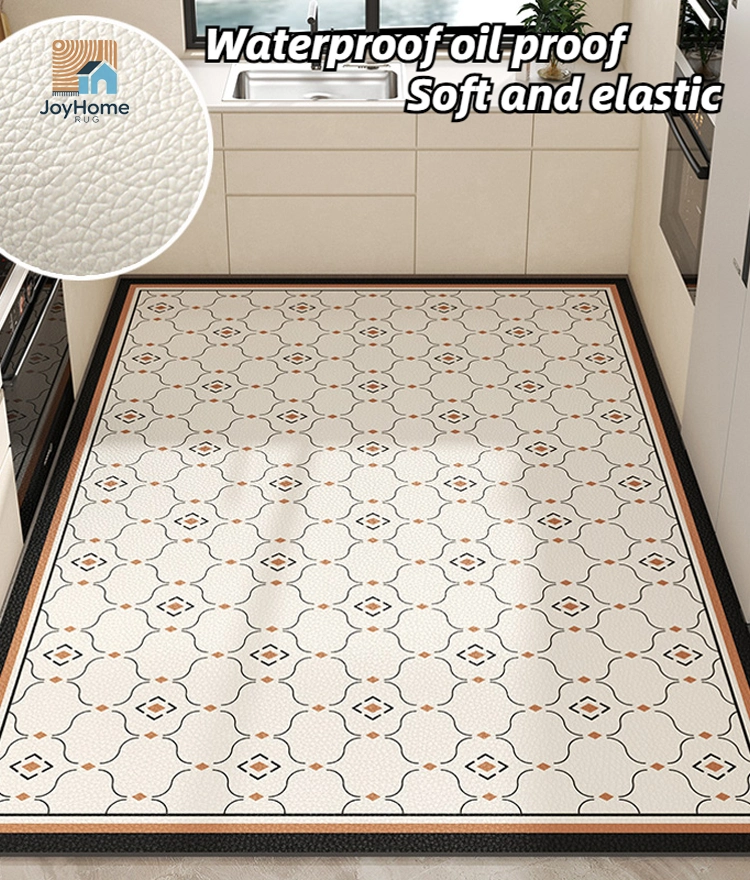
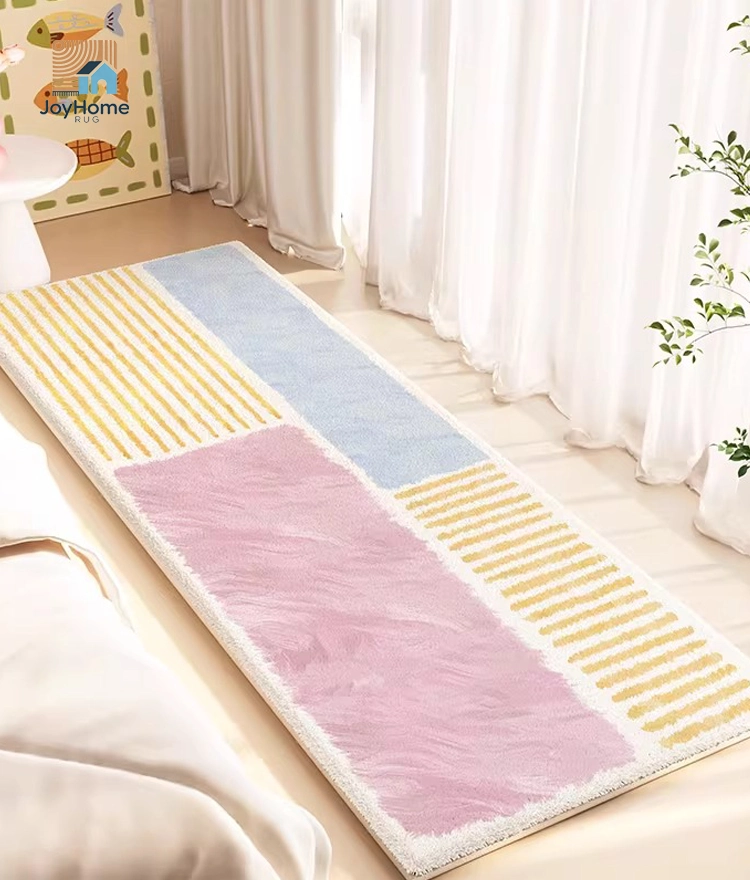
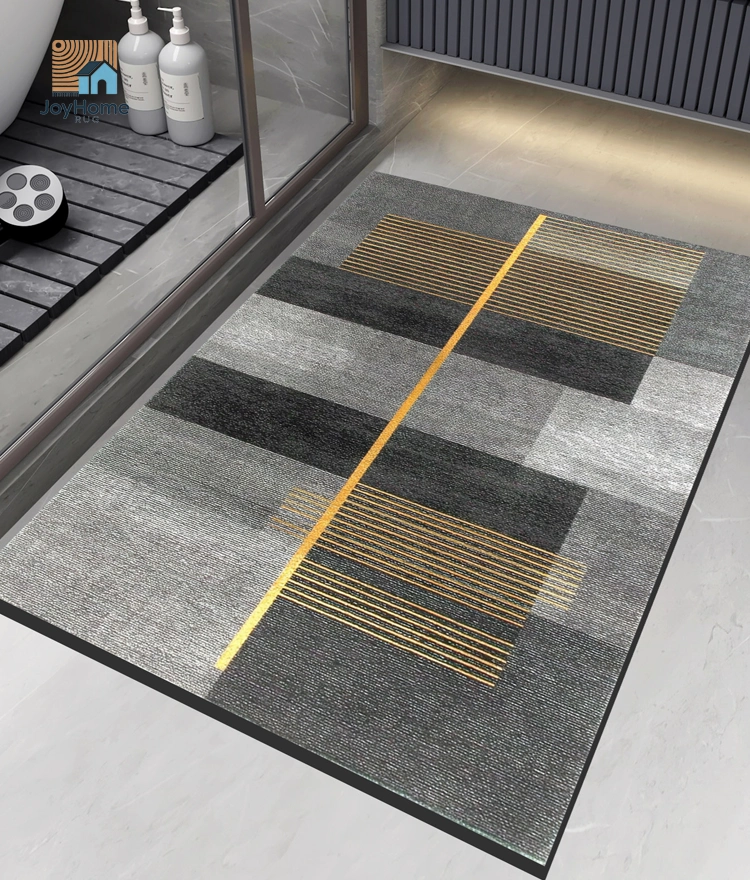
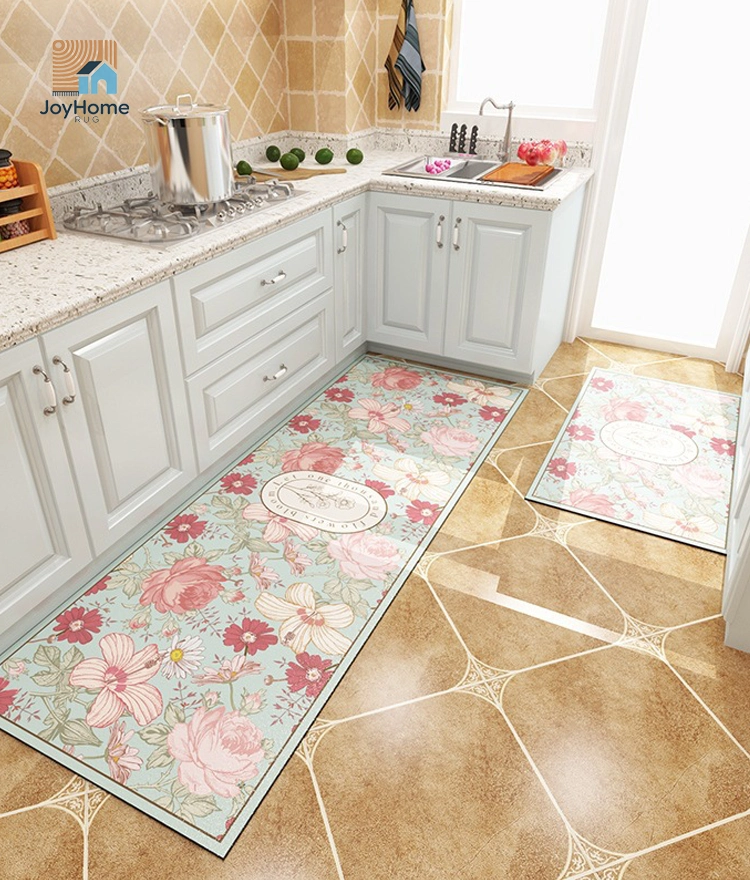
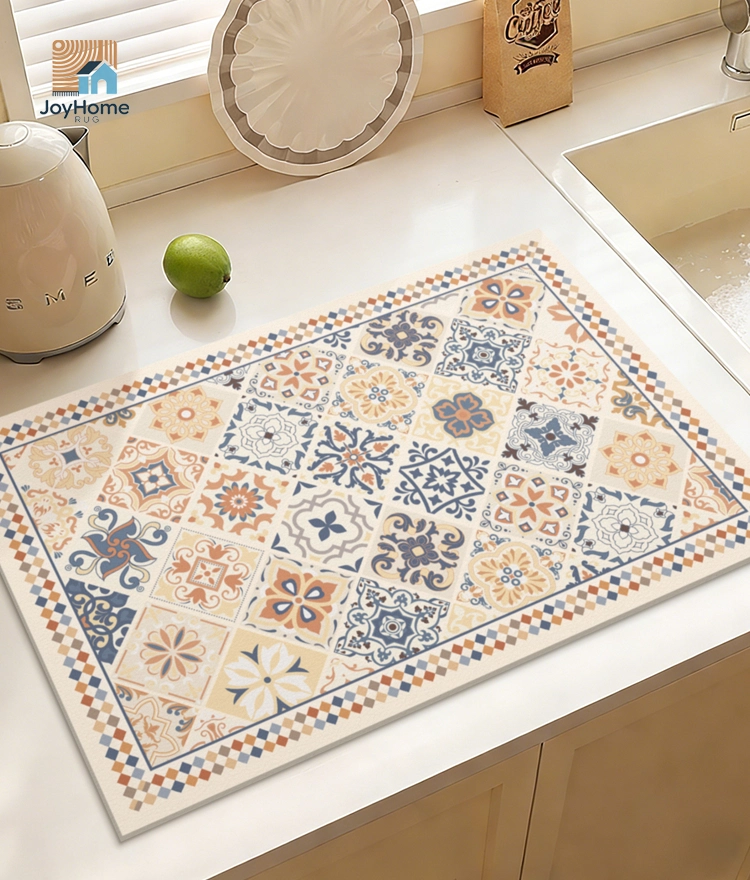
A professional kitchen needn’t seem industrial. Modern business floor mats are available in printed patterns, plain colours and bespoke designs that promote brand recognition without compromising functionality.
What Makes a Mat "Commercial-Grade"
Commercial mats, such as stylish kitchen mats, include weight specifications (usually 750g/m2 upwards), a CE or ISO 9001 certification, and surface treatments such as anti-stain coatings and a silicone-strip backing for high-traffic, damp areas.

Core Selection Criteria: Materials, Features, and Styles
The first step in selecting the proper mat is material. Some materials are better than others at handling grease, wetness, heat, and foot traffic. Knowing each choice saves time and expensive errors.

Best Materials for Commercial Kitchen Mats
Crystal velvet (high-density polyester fibre) is a popular commercial-grade surface material because it absorbs moisture rapidly and dries quickly, an important benefit in kitchen areas, which tend to be the scene of spills. PVC and rubber remain popular choices for back-of-house areas because of their oil resistance, while foam-core mats are ideal for prep stations where people are on their feet for lengthy periods.
Must-Have Features in a High-Traffic Kitchen Mat
Below are the main aspects that every procurement team should verify before conducting a bulk order:
- Silicone or dot-plastic backing grabs tight to tile, hardwood, and concrete surfaces, even when wet. That’s a direct decrease in slip-and-fall events.
- Wipe clean with regular detergent; grease and sauce residue. Stain-resistant surface treatment: Odour development and bacterial retention are prevented by stain-resistant surfaces.
- 5mm thickness with anti-fatigue support: According to research from Cornell University's Ergonomics Lab, standing on cushioned surfaces may decrease lower-limb tiredness by as much as 50% compared to standing on bare concrete.
- Absorbent, quick-drying waterproof barrier: Captures surface spills without soaking the mat body, enabling fast drying during shift changes.
- Lock-edge finishing: Precision-stitched or heat-sealed edge eliminates fraying and edge curl — the number one source of trip hazards in commercial mat products.
These five elements combine to provide a mat that protects personnel, satisfies health inspectors, and stands up to years of everyday commercial usage.
Design Options That Work in Professional Settings
Heat-transfer printing method bonds fade-resistant patterns and logos right into the mat surface. This provides hotels, restaurants, and retail food enterprises with branded floor mats that have the same visual weight as signs or uniforms.
Segmenting Your Mat Needs by Kitchen Type and Volume
Not every commercial kitchen faces the same demands. A ghost kitchen running two shifts daily has different requirements than a hotel banquet kitchen or a school cafeteria.
Matching Mat Spec to Traffic Volume
For high-volume kitchens processing 200+ covers each service, stylish kitchen mats with a rating of 1,000g/m2 or higher should be prioritised. This weight density immediately correlates with extended product life under foot traffic and compression. For lower volume prep kitchens, 750g/m2 alternatives might be a good choice, since they reduce material expense while still maintaining a safe environment.
Flooring Substrate Considerations
The silicone-strip backing works well on tile and polished concrete, but textured concrete may need a thicker backing pattern to get complete contact. Always check backing compatibility with your particular substrate before making a bulk purchase.
Bulk Ordering and Custom Branding for Multi-Site Operations
Standardised mat standards decrease procurement complexity for chains, hotel groups or institutional food service providers with various sites. All sites can accommodate custom size choices and OEM/ODM programs in a single manufacturing run, enabling purchasers to choose specific dimensions, colours and brand placement.
Comparing Popular Commercial Kitchen Mat Options
The market offers a range of products positioned for commercial use. Here is how the main categories compare on the factors that matter most to B2B buyers.
Crystal Velvet Mats vs. Traditional Rubber Mats
Back-of-house areas are dominated by traditional rubber mats due to their oil resistance, but they provide an outdated look and may deteriorate with repetitive chemical cleaning. “Crystal velvet mats provide a softer surface, dry faster, and offer much more design flexibility, making them a better choice for front-of-house or open-kitchen footprints where guests will be able to see the mats,” he says.
Waterproof Mats vs. Fabric-Surface Mats
Waterproof barrier mats repel moisture at the surface and prevent mould formation by keeping the mat body dry. Non-waterproof fabric-surface mats absorb spills into the body of the mat and may cause odour and germ retention over time. Waterproof surface treatments are required for commercial kitchens subject to health inspections.
Anti-Fatigue Cushioned Mats for Productivity
Research published in Applied Ergonomics in 2016 indicated that workers using stylish kitchen mats reported 35% less lower-back pain after four hours of standing. In industrial kitchens, where employees stand for whole shifts, this means fewer injury claims and less staff turnover.
Maintenance, Longevity, and Sustainability
A mat that is difficult to clean will be ignored, and a neglected mat is a safety and hygiene problem. Maintenance practices must be considered from day 1 in purchase decisions.
Cleaning Protocols for Commercial Kitchen Mats
Machine washable mats are not subject to the labour expense of physical cleaning. Mats with anti-stain surface coating may be cleaned or wiped off between shifts without speciality cleaning products. Do not use detergents containing high levels of bleach on printed mats unless the provider has confirmed that they are chemically resistant.
Certifications and Green Standards to Look For
100, provide that the materials are free of any dangerous elements – an essential aspect to consider for kitchen situations where personnel will be in frequent touch with the mat surface. The CE mark and ISO 9001 quality management compliance indicate the firm has established, auditable controls on manufacturing. The EN 13501 fire safety certificate provides another layer of safety assurance for commercial environments.
Total Cost of Ownership vs. Unit Price
The higher-quality mat is more expensive, but it costs more over two years since the cheaper mat needs replacing every six months. When shopping for kitchen mat vendors, seek statistics on the estimated longevity of the mat under commercial usage circumstances, not only the price per unit.
Conclusion
There are five important things to consider when choosing the most fashionable, stylish kitchen mats for a commercial kitchen: material performance, anti-slip backing, waterproof treatment, anti-fatigue cushioning, and simplicity of maintenance. Certifications like CE, OEKO-TEX, and ISO 9001 are objective quality standards. Custom size, bulk flexibility, and OEM/ODM choices simplify complexity and elevate brand consistency for B2B customers that manage multi-site procurement. It's the entire cost of ownership, not unit pricing, that drives greater long-term results. The appropriate mat protects personnel, satisfies regulators, and keeps your kitchen looking professional every shift.
FAQ
Are stylish kitchen mats suitable for heavy daily use in professional kitchens?
Yes. Commercial-grade kitchen mats rated at 750g/m² to 1,100g/m² are engineered for sustained heavy use. Silicone-strip backing and anti-stain surface treatment maintain performance through repeated cleaning cycles without degrading grip or surface integrity.
What safety and hygiene certifications should I look for?
Look for CE certification, OEKO-TEX Standard 100, ISO 9001, and EN 13501 fire safety certification. These confirm material safety, production quality control, and fire resistance—all relevant to commercial kitchen compliance requirements.
Can I order custom sizes and branded designs in bulk?
Yes. OEM/ODM programs allow full customization of size, color, pattern, and logo placement. Flexible minimum order quantities support both small pilot orders and large multi-site rollouts. Sample production typically takes 24–48 hours, with bulk orders shipping within 7–15 days.
How do I clean commercial kitchen floor mats effectively?
Machine-washable mats with anti-stain treatment can be laundered or rinsed between shifts. Avoid abrasive chemicals unless the supplier confirms compatibility. Quick-drying absorbent surfaces reduce downtime between cleaning cycles.
Get Custom Kitchen Mat Solutions from JoyHome
JoyHome is a trusted, stylish kitchen mats manufacturer based in Tianjin, China, with 20,000 m² of production space, 25 advanced machines, and an output capacity of 3,000 m²/day. Our crystal velvet kitchen mats carry CE, OEKO-TEX, ISO 9001, and EN 13501 certifications. We support OEM/ODM customization, flexible bulk orders, and 24–48-hour sample turnaround. Contact our team at admin@longtengmen.com to request a quote or product catalog today.
References
1. National Floor Safety Institute. Slip and Fall Statistics in the Food Service Industry. NFSI, 2022.
2. Humantech. Ergonomic Matting and Standing Fatigue Reduction in Industrial Workplaces. Applied Ergonomics Journal, 2016.
3. OEKO-TEX Association. OEKO-TEX Standard 100: Testing for Harmful Substances in Textiles. OEKO-TEX, 2023.
4. Cornell University Ergonomics Lab. The Effect of Anti-Fatigue Matting on Lower-Limb Fatigue During Prolonged Standing. Cornell University, 2019.
5. International Organization for Standardization. ISO 9001:2015 Quality Management Systems Requirements. ISO, 2015.
6. European Committee for Standardization. EN 13501-1: Fire Classification of Construction Products and Building Elements. CEN, 2018.
Online Message
YOU MAY LIKE
High quality furniture manufacturer