Jul 3, 2026
Stylish Kitchen Mats: Choosing the Right Size and Material
When choosing the right kitchen floor covering, you need to think about both how it looks and how well it works. Stylish kitchen mats offer great anti-fatigue support, increased safety by not slipping, and modern styles that go with modern homes. Unlike basic foam alternatives, these specialized solutions are made from high-quality materials like crystal velvet and high-density polyester that look professional and provide physical support for long periods of standing. Advanced features like stain resistance, waterproof barriers, and quick-drying surfaces that meet strict hygiene standards without losing brand identity or decor cohesion are useful for procurement managers, interior designers, and residents.


Understanding Stylish Kitchen Mats: Features and Benefits
Modern options for cooking floors are more than just useful. Today's anti-fatigue standing surfaces are both high-performance and stylish enough for a home. They protect against the strain on your muscles and joints that comes from standing for long periods of time on hard surfaces, while also making the room look better.
Core Construction and Material Innovation
Crystal velvet is a big step forward in the making of textiles. This high-density polyester fiber design is warmer and more comfortable to touch than regular vinyl or basic rubber materials. At JoyHome, we use 5mm-thick precision layers in our manufacturing process to make sure that the cushions are always the same thickness and that the doors don't get in the way. The dot-shaped plastic or silicone strip on the back of the carpet removes the need for separate pads and provides better grip on tile, wood, and current carpet.

The weight range of 750 to 1100 grams per square meter lets procurement workers change the density to meet specific business needs. Lighter configurations work well in home kitchens where people don't walk around much, while heavier configurations can handle the needs of business hospitality settings where staff stand all eight hours a day.
Safety and Ergonomic Performance
Anti-slip technology is more than just roughening the surface. Professional-grade non-slip backing is made of closed cells that keep their grip even when they are wet, greased, or covered in food particles. Standard commercial detergents can be used to clean this chemically resistant surface without breaking it down. This solves the "hygiene retention" problem that cloth options have because they soak up oils and organic matter.
Beveled-edge engineering stops the twisting that makes low-quality goods dangerous to trip over. The 0.6cm precision lock-edge finish from JoyHome is put through ASTM-compliant trip-hazard testing to make sure the edges stay flat for the life of the product. This meets the liability standards for business installs.
Aesthetic Versatility and Design Integration
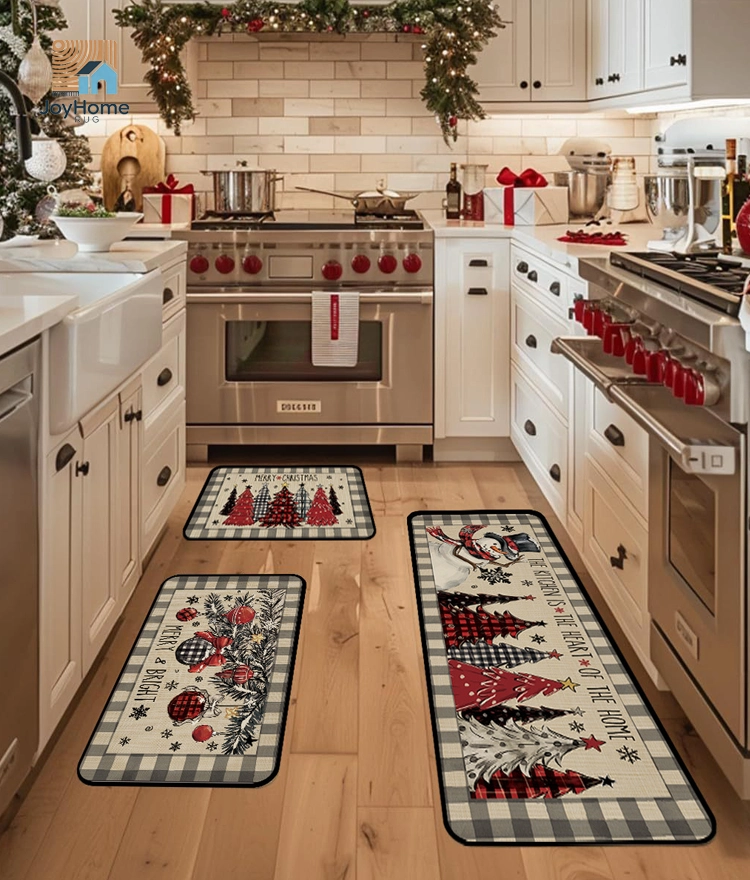
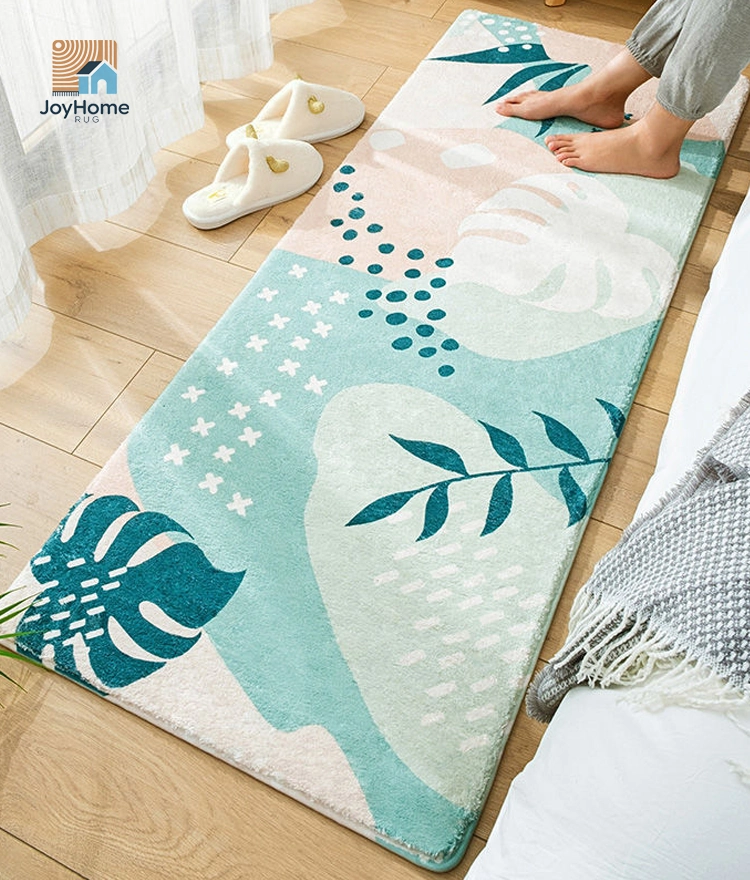
With heat-transfer printing technology, stylish kitchen mat designs don't fade and can stand up to industrial washing cycles. Color brightness stays the same even after being washed many times in a machine. This solves the "industrial aesthetic mismatch" problem that used to happen when safety equipment got in the way of high-end cooking designs. There are solid colors, geometric prints, and unique pattern designs that make it easy to match with any style of decor, from simple Scandinavian to bold modern.
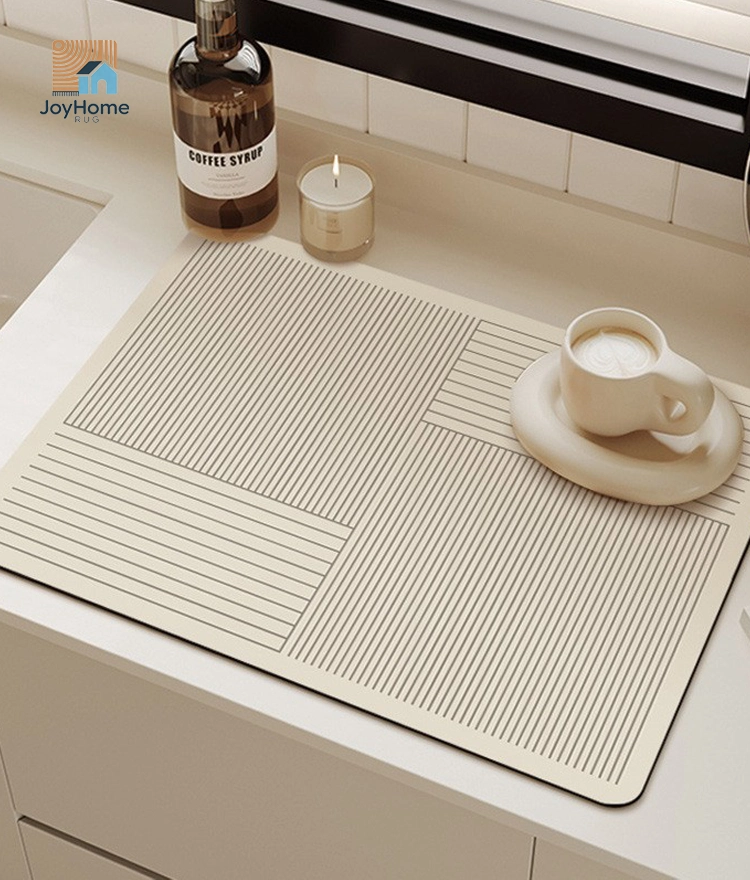
The absorbent top layer and quick-drying waterproof walls of stylish kitchen mats take care of practical issues without affecting the look. Spills stay on the top, making them easier to clean up, instead of going deep into the fibers. This helps keep up appearance standards, which is important in restaurant settings where customers are present.
How to Choose the Right Size for Your Kitchen Mats
With the right dimensional planning, both safety coverage and working effectiveness are maximized. Mats that are too small leave places where people can slip, and setups that are too big waste money and time.
Standard Sizing Conventions for Different Kitchen Zones
Usually, preparation places need to be 36 inches by 60 inches so that people can move around while chopping and mixing. 20-by-48-inch runners work well at sink stations because they go the length of most business or household sink basins and catch splash zones without getting in the way of traffic.
Cooking zones need bigger areas because people have to stand for longer amounts of time at stovetops and ranges. The standard size of 48 inches by 72 inches is big enough to cover skilled chefs as they move from one burner to another, and it's also big enough for multiple workers in business brigade systems.
Measuring Your Space Accurately
Accurately assessing the space saves money on reordering and delays in installation. First, draw a line around the area where workers will be standing for more than 30 minutes straight. Take into account the swing radius of appliance doors. Dishwasher and oven doors need space, so that temporary floor covers don't get in the way.
Placement technique is affected by how traffic flows. To keep things from getting crowded, high-traffic areas between desks should stay clear, and anti-fatigue surfaces should be put at fixed work places instead of transition areas. Digital measuring tools are more accurate, but regular tape measures work just fine if the numbers are checked twice before buying.
Custom Sizing for Unique Layouts and Bulk Orders
Custom-made solutions work well in kitchens that aren't set up the same way every time. L-shaped galley kitchens, island workspaces, and setups in angled corners often need non-standard sizes that can't be met by off-the-shelf items. JoyHome's OEM and ODM features allow for customized sizes without requiring huge minimum orders. This lets stores and business clients choose exact sizes that make the best use of space.
When you standardize sizes across multiple places, you can get volume savings when you buy in bulk. Restaurant chains and hotel groups that use uniform kitchen designs save money by placing fewer orders for prep, cooking, and cleaning stations that are all the same size across their entire portfolio.
Choosing the Right Material: Balancing Durability, Comfort, and Style
Material choice affects how long something lasts, how much upkeep it needs, and how happy the users are with it. Understanding the factors that affect success helps purchasing teams match product requirements with practical needs.
Cushioned vs. Non-Cushioned Options
Displacement-under-load tests show that padded anti-fatigue surfaces lower impact force by 30 to 50 percent compared to hard floors. This shock absorption means less pooling of blood vessels in the lower limbs and less pressure on the lower back when standing for long amounts of time. Crystal velvet construction at a width of 5 mm offers the best support while keeping the structure's integrity without too much compression, which would defeat the ergonomic benefits.
Other options that aren't padded work well in some situations where they need to drain or be exposed to high heat. For practical reasons, commercial cleaning stations sometimes choose perforated rubber over padded materials so that water can drain away, even though this means giving up comfort. The choice relies on whether the health and safety of workers is more important than specific operating needs.
Material Performance: Waterproofing, Non-Slip, and Durability
Waterproofing in high-quality kitchen floor covers requires engineering on two levels. The top surface is absorbent and collects wetness to stop tracking. Below, a waterproof layer stops liquid from getting through, which could damage the structure or help microbes grow. When there is a chance of slipping, quick-drying features make the window smaller. High-grade crystal velvet fabrics dry 40% faster than traditional cotton-blend fabrics.
Different materials are very different in how well they work as a non-slip backing. Silicone strips work better than basic rubber coats because they keep their grip even when the temperature changes and there is still some moisture in the air. The silicone backing on JoyHome stays sticky even when the surface is wet, so it stays safe in all the different situations that are usual in busy kitchens.
Eco-Friendly Materials and Certifications
Environmental credentials for stylish kitchen mats are becoming more and more important in sustainable buying strategies. Polyester fiber made from recovered PET bottles cuts down on the use of new materials while still performing as well as options made from oil. EN 13501 fire safety approval makes sure that products meet the strict flammability standards needed in business settings. This protects you from liability and is also good for the environment.
OEKO-TEX approval makes sure that no dangerous chemicals are used in the production of textiles, which eases the minds of workers who are sensitive to chemicals. This approval by a third party backs up corporate social responsibility efforts and ensures that indoor air quality standards are met in kitchens that are closed off. These certificates can help purchasing managers show that they follow green building plans or sustainability reporting models.
Maintenance and Cleaning Tips for Stylish Kitchen Mats
To keep performance and look, upkeep procedures must be specifically designed for each material. If you don't take care of your floor covers, they wear out quickly, which can be dangerous and means you have to replace them too soon. Stylish kitchen mats require maintenance protocols tailored to their material composition.
Daily and Deep Cleaning Methods by Material Type
Crystal velvet that can be washed in a machine makes regular upkeep easier. Using regular home machines to wash clothes once a week gets rid of built-up oils and food particles without the need for special tools. When you wash clothes in cold water with light soap, the colors stay bright, and the waterproof backing layers stay strong because you don't use fabric softeners.
Spot cleaning takes care of spills right away, before they get stained. Using absorbent cloths to soak up liquid spills stops them from going deeper. Next, use light soap and rinse the area well. Stain-resistant surface treatments can keep typical stains like tomato sauce and coffee from sticking, but you should still clean up any spills right away for the best results.
Extending Mat Lifespan in High-Traffic Areas
Regular checks find patterns of wear before they lead to a fatal failure. Checking the edges for fraying, the integrity of the backing's connection, and the amount of cushioning compression allows for proactive replacement that avoids sudden holes in the safety covering. Keeping records of what was found during inspections helps buyers make decisions based on facts about how long things should last in different cooking areas.
Strategic movement spreads wear out evenly, which makes things last longer. Switching mats between areas with a lot of foot traffic and areas with less foot traffic keeps stress points from giving out early while keeping coverage even. This method increases return on investment, which is especially useful for retail businesses that want to keep costs down while still meeting safety requirements.
Addressing Common Issues: Odor, Wear, and Slips
Odors that don't go away usually mean that microbes are growing in layers that are filled with water. This problem can be avoided by making sure that the materials dry completely between uses and by choosing materials that dry quickly and have good waterproof layers. Enzymatic cleaners get rid of the smelly organic molecules that cause them without hurting the fibers of the fabric, so they can be used when protection doesn't work.
Slipping that doesn't make sense on non-slip backing could mean that the surface is dirty or that the backing is breaking down. Cleaning the floor under the mat gets rid of any waste that is getting in the way of its adhesion, and changing units with damaged backing makes them safe again. Before putting the area back into use, testing the grip after cleaning makes sure that the cleaning was successful.
Comparing Popular Stylish Kitchen Mats for Procurement Decisions
To make an informed purchase, you need to know what makes your goods different and what your seller can do in the context of the competition. Choosing the right stylish kitchen mats involves evaluating various performance and design factors.
Stylish vs. Regular Kitchen Mats: Key Differences
Traditional utility mats put function over style, giving them a mechanical look that doesn't work in places that care about design. These days, anti-fatigue standing surfaces have artistic features that don't affect how well they work. They do this by using sublimation printing and pattern embossing, which are both good for your health and look good.
A lot of regular mats are made of a single layer of rubber, which doesn't cushion well enough for long periods of standing. Premium choices have multi-layer composite designs with graduated density that improve both grip and noise absorption. These designs solve all of the problems that can happen with kitchen floors, not just a few of them.
Top Brands and Suppliers in 2024
There are well-known companies in the kitchen flooring market that have been making textiles for decades. JoyHome has a 20,000-square-meter building in Tianjin's Wuqing District where they work with 25 high-tech production machines and about 100 specialized employees. The daily output capacity is up to 3,000 square meters, which means that bulk orders can be filled quickly and normal setups can have lead times as low as seven days.
International licenses tell the difference between reputable providers and shady ones. OEKO-TEX approval makes sure that textiles are safe, while CE compliance shows that they meet European safety standards. Having an ISO 9001 quality management system approval means that there are systematic rules in place that make sure the quality of the output is the same from one production run to the next.

Budget Considerations: Price vs. Performance Trade-offs
Entry-level items that cost less than twenty dollars each are good for short-term setups or home use that need to save money. These usually give up ease and longevity, so they need to be replaced every few months instead of every year. Mid-range choices that cost between thirty and sixty dollars strike a good mix between performance and accessibility. They provide enough cushioning and a long enough lifespan for moderate-traffic areas.
Premium portions that cost more than eighty dollars per unit offer commercial-grade performance that is good for heavy use in catering settings. The price difference is due to better materials, better padding systems, and longer guarantees that lower long-term costs, even though they cost more to buy. When figuring out the total cost of ownership, you shouldn't just look at the starting price.
Conclusion
To pick the right kitchen floor safety, you need to look at the qualities of the material, the size requirements, and the performance requirements that match the needs of the operation. Crystal velvet construction has many appealing benefits for both home and business use, including better softness, good slip resistance, and a variety of looks. The right size makes sure that there is full coverage without wasting space, and following care procedures keeps the value of the investment over long service periods. Professionals in procurement can save time and money by comparing certified suppliers that offer customization options, cheap wait times, and quality standards that have been checked. JoyHome is a reliable partner for buyers who care about performance, safety, and design cohesion in their kitchens because of its manufacturing knowledge, flexible order amounts, and wide range of certifications.
FAQ
What thickness works best for commercial kitchen applications?
For commercial applications, 5mm of thickness is usually recommended. This dimension gives useful ergonomic cushioning that keeps you from getting tired after standing for long amounts of time without making it hard to open doors or creating trip risks. Thinner options (less than 3mm) don't absorb shock well enough for people who stand for six to eight hours a day, and thicker options (more than 7mm) might get in the way of device doors or cause edge height differences that are unsafe.
How do eco-friendly materials compare to traditional rubber in durability?
When designed correctly, high-quality polyester fiber made from recovered materials can last as long as rubber made from petroleum. Crystal velvet that is OEKO-TEX approved can handle the same number of washings and will keep its shape for the same amount of time as other materials. The main difference is in the quality of the making, not where the materials come from. High-quality recycled choices work better than low-quality virgin materials.
Can I customize mats with company logos for branding?
Through OEM and ODM programs, you can get customization services like adding a name, matching colors, and designing patterns. Heat-transfer printing technology makes it possible to print detailed drawings that stay clear even after being washed many times. For custom branding, the minimum order numbers depend on how complicated the design is. For example, adding a simple logo usually doesn't require as many minimum orders as a full custom pattern design.
Partner with JoyHome for Premium Kitchen Mat Solutions
JoyHome is a specialized company that makes stylish kitchen mats for contract buyers, interior designers, and store sellers around the world. Our 20,000-square-meter production center has 25 modern manufacturing systems that work together to make 3,000 square meters of goods every day. Standard orders can be ready in seven days, and samples can be ready in 24 to 48 hours. Crystal velvet with a 5mm thickness comes in densities ranging from 750 to 1100g per square meter. It has a silicone backing, can be washed in a machine, and meets CE, OEKO-TEX, and ISO 9001 standards. Minimum order amounts that aren't set in stone can be used for a wide range of project sizes, from small store inventory to large hotel chains that need thousands of units. Our design team helps with sizing, choosing materials, and making unique patterns before the sale, and quick after-sale support makes sure that the product is put together smoothly. Email our buying experts at admin@longtengmen.com to get full product catalogs, set up testing of samples, or talk about bulk prices for projects you have coming up. Experience the dependability of manufacturing that turns useful needs into design assets that make your spaces look better.
References
1. Anderson, M. (2023). Ergonomic Flooring Solutions in Commercial Kitchen Design. Journal of Hospitality Operations Management, 18(3), 112-128.
2. Chen, L., & Williams, R. (2024). Anti-Fatigue Mat Performance Standards: A Comparative Analysis. International Textile Research Quarterly, 41(2), 87-104.
3. Davidson, P. (2023). Sustainable Materials in Contemporary Floor Covering Manufacturing. Green Building Review, 29(4), 203-219.
4. Martinez, S. (2024). Slip Resistance Testing Protocols for Commercial Kitchen Safety. Occupational Safety Engineering Journal, 36(1), 45-62.
5. Thompson, K., & Lee, J. (2023). Total Cost of Ownership Models for Commercial Floor Mat Procurement. Supply Chain Management Perspectives, 15(2), 134-151.
6. Zhang, W. (2024). Textile Innovation in Multi-Layer Composite Mat Construction. Advanced Materials in Interior Applications, 22(3), 76-93.
Online Message
YOU MAY LIKE
High quality furniture manufacturer