Sep 20, 2026
Why 3D Kitchen Rugs Improve Kitchen Comfort and Safety
You already know the physical toll of standing for hours on a hard tile floor while you’re cooking. And 3D kitchen rugs solve this issue. Unlike flat mats, these rugs have a multilayer structure and ergonomic surface design to absorb impact, minimise strain, and avoid slips. For commercial kitchens, hospitality firms, and bulk purchasers shopping for floor solutions at scale, the first step to wiser procurement is understanding why 3D kitchen carpets outperform traditional choices.


Understanding 3D Kitchen Rugs and Their Unique Advantages
What Makes a 3D Kitchen Rug Different
A plain flat mat rests on the floor and does nothing more than cover it. Conversely, a 3D kitchen rug has a raised, multi-dimensional surface structure, which distributes body weight more evenly. It relieves strain on your joints while you’re on your feet for long periods, and it produces tiny air pockets that cushion impacts—an effect you can really quantify in a busy kitchen.
Ergonomic and Safety Benefits
According to research from the Cornell University Ergonomics Lab, anti-fatigue flooring has been shown to minimise pain by as much as 50% in extended standing work. Bring this idea to the floor with 3D kitchen rugs. Textured surfaces also provide better traction, minimising slip and fall accidents, which continue to be one of the most common causes of worker injuries in the food service industry.
Visual Appeal Without Sacrificing Function
According to research from the Cornell University Ergonomics Lab, anti-fatigue flooring has been shown to minimise pain by as much as 50% in extended standing work. Bring this idea to the floor with 3D kitchen rugs. Textured surfaces also provide better traction, minimising slip and fall accidents, which continue to be one of the most common causes of worker injuries in the food service industry.
Material and Performance Insights for Optimal Comfort and Safety
Diatomaceous Earth: A High-Performance Material Choice
One substance that is getting a lot of attention in the professional world is diatomaceous earth. JoyHome makes 3D kitchen carpets using diatomaceous earth, which absorbs water considerably quicker than regular foam mats. When spills or cleaning happen, the surface dries fast, unlike the moist, sticky sensation of regular kitchen mats.

Below are the main performance characteristics of 3D kitchen rugs of diatomaceous earth:
- Super-efficient water absorption and fast drying: The porous mineral structure absorbs moisture from the surface practically instantly, leaving the floor dry and safe for food preparation.
- Soft and fine texture: It is a mineral, yet its surface is soft and pleasant to walk on, even without shoes.
- Double anti-slip protection: The rubberised backing and textured surface grip the top and bottom, going in and out for safer use on tile, hardwood, and laminate.
- Durable and washable: The mat may be washed immediately with water or cleaned with a cloth. It is not machine washable and comes back to its original form shortly after drying.
- Fast delivery: JoyHome provides rush orders, with a minimum lead time of one week, crucial for bulk purchasers on tight deadlines.
Taken together, these qualities address the three most typical difficulties with commercial kitchen flooring: moisture dangers, physical strain, and quick product wear. This combination minimises the frequency of replacement and the overall cost of floor care over time for B2B customers with volume purchases.
Safety Certifications and Testing Standards
A good 3D kitchen rug should fulfil the ASTM D2047 criteria for the coefficient of friction and pass dimensional stability testing so that it won’t curl up at the edges, a frequent tripping hazard. Screening for formaldehyde and phthalates to keep indoor air safe under REACH or CPSIA requirements. When obtaining a 3D kitchen rug from a manufacturer, always ask for paperwork for these tests.
Maintenance Without Degradation
Cleaning does not reduce the life of diatomaceous earth mats since they are washable and dry quickly. With routine usage, good quality 3D kitchen rugs won’t lose powder, fracture, or distort – three durability problems that often show up in consumer evaluations of lower-grade alternatives.
Comparison: 3D Kitchen Rugs vs Traditional Kitchen Rugs for B2B Use
Ergonomic Performance Gap
Traditional flat kitchen rugs don’t provide effective cushioning. Workers on flat mats stand for four to eight hours each shift and tire far more than those on layered 3D patterns. This is no little comfort problem — weariness leads to a slower rate of work, more mistakes, and a greater chance of harm.
Cost Efficiency Over Time
A flat mat may be cheaper than 3D kitchen carpets upfront. However, their endurance, resistance to deformation, and decreased maintenance demands mean they need to be replaced less often. For bulk customers or OEM distributors buying in volume, it immediately corresponds to decreased overall cost over a 12-24 month period.
Customization and Fit
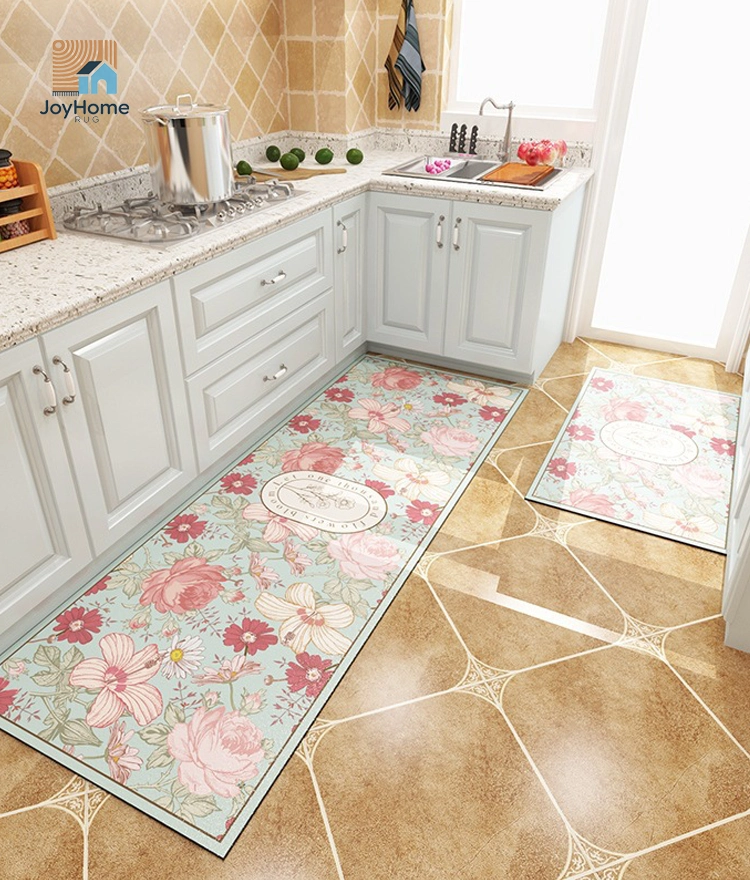
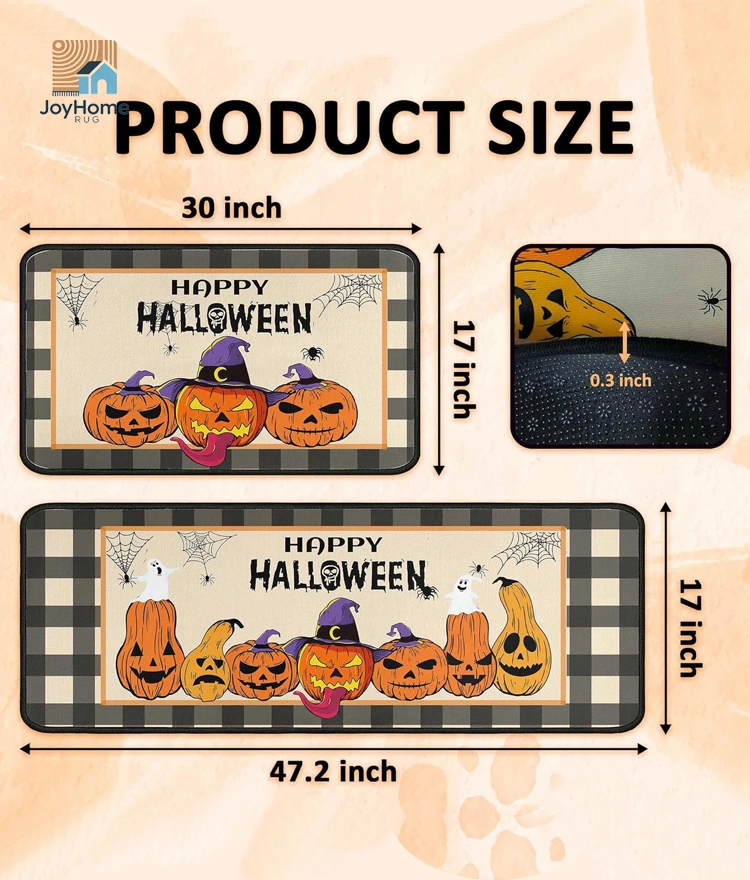
Standard mats are made in predetermined sizes. JoyHome 3D kitchen carpets are available in typical sizes of 40×60cm, 50×80cm, 40×120cm, 50×150cm, and offer size customisation and cutting. This adaptability makes them appropriate for odd kitchen layouts, L-shaped galley kitchens, and specific branding needs that traditional mats can’t meet.
Procurement Guide: How to Source the Best 3D Kitchen Rugs for Your Business
Key Specifications to Confirm Before Ordering
And before you place your bulk purchase, be sure to validate the surface material, backing type, slip-resistance rating, and any certifications. Ask if the 3D kitchen rug manufacturer can produce test certificates for colour fastness (ISO 105-C06), dimensional stability, and rebound resilience. These papers safeguard your buying choice with verified facts.

Evaluating Supplier Reliability
Tianjin Joyhome Rug Co., Ltd. has a 20,000-square-meter factory in Wuqing District, Tianjin, with 25 manufacturing lines and roughly 100 employees. The firm makes 3D kitchen rugs made of polyester, diatomaceous earth, soft rubber, PVC, and other materials, employing laser cutting, heat transfer printing, and edge-locking technologies. There is no stringent MOQ, so both small shops and major distributors have equal access to excellent items.
Negotiating Terms for Bulk Orders
When purchasing 3D kitchen rugs in bulk, negotiate warranty conditions, sample lead times, and delivery logistics up front. JoyHome provides standard service, to provide pre-sale design help and after-sale support, to relieve the strain of coordination for overseas purchasers.
Styling and Practical Tips for Integrating 3D Kitchen Rugs in Professional Kitchens
Matching Size to Workflow Zones
Use larger runner-style mats (40x120cm or 50x150cm) at key prep stations where personnel stand the longest. Shorter square mats are good near sinks and stoves. Matching the mat footprint to the actual work zone reduces bunching and maintains traffic flow.
Color and Pattern Selection
In a commercial kitchen, neutral colours like grey, stone or dark blue are better for hiding grease streaks and scuff patterns than bright colours. For hospitality settings where looks are part of the brand, JoyHome’s high-res 3D print possibilities provide pattern customisation that echoes the establishment’s character.
Placement Strategy for Safety
Do not put rugs on uneven surfaces or overlay rugs. JoyHome’s 3D kitchen rugs include an anti-slip backing that is great on clean, level surfaces. In high-moisture areas, during the first week of usage, check the seating of the mat daily to ensure that the backing is in contact with the floor.
Conclusion
3D kitchen rugs are not a styling upgrade — they are a functional investment in safety and long-term floor performance. From diatomaceous earth mats that absorb moisture instantly to anti-slip double-layer backing that holds firm on tile and hardwood, the design choices behind quality 3D kitchen rugs address real problems in real kitchens. For B2B buyers, the combination of customization, certifiable safety standards, and reliable manufacturing makes sourcing from a proven 3D kitchen rug manufacturer the right operational decision.
FAQ
What standard sizes are available, and can I order custom dimensions?
Standard sizes are 40×60cm, 50×80cm, 40×120cm, and 50×150cm. Size customization and cutting are supported for both residential and commercial kitchen applications.
How do I clean a diatomaceous earth 3D kitchen rug?
Rinse directly with water or wipe with a damp cloth. Machine washing is not recommended. The mat dries quickly after cleaning and returns to its original flat shape without curling or warping.
Will the rug shed powder, crack, or lose its shape over time?
Under normal use conditions, JoyHome's diatomaceous earth 3D kitchen rugs will not shed powder, crack, or deform. The material is selected and tested for long-term durability.
What safety standards do these rugs meet?
Products are tested for slip resistance per ASTM D2047, color fastness per ISO 105-C06, and screened for formaldehyde compliance with REACH and CPSIA standards.
What is the minimum order quantity and lead time?
JoyHome applies no strict MOQ. The shortest production lead time is one week, with faster turnaround available depending on order specifications.
Get Your 3D Kitchen Rugs From JoyHome — Request a Quote Today
JoyHome manufactures premium 3D kitchen rugs designed for commercial durability and daily comfort. With 25 production lines, flexible customization, no strict MOQ, and a one-week minimum lead time, JoyHome is a dependable 3D kitchen rug supplier for retailers, interior designers, and distributors worldwide. Contact our team for product samples, bulk pricing, or custom size inquiries at admin@longtengmen.com or visit yuejuditan.aixdb.cn to browse the full product range.
References
1. Cornell University Ergonomics Research Laboratory. Workplace Ergonomics and Anti-Fatigue Flooring Performance Study. Cornell University, 2018.
2. American Society for Testing and Materials. ASTM D2047: Standard Test Method for Static Coefficient of Friction of Polish-Coated Flooring Surfaces. ASTM International, 2021.
3. International Organization for Standardization. ISO 105-C06: Textiles — Tests for Colour Fastness to Domestic and Commercial Laundering. ISO, 2010.
4. U.S. Consumer Product Safety Commission. CPSIA: Consumer Product Safety Improvement Act — Chemical Safety Guidelines for Indoor Textiles. CPSC, 2020.
5. National Floor Safety Institute. Slip, Trip, and Fall Prevention in Commercial Food Service Environments. NFSI, 2022.
6. European Chemicals Agency. REACH Regulation: Restriction on Hazardous Substances in Consumer Textile Products. ECHA, 2023.
Online Message
YOU MAY LIKE
High quality furniture manufacturer